
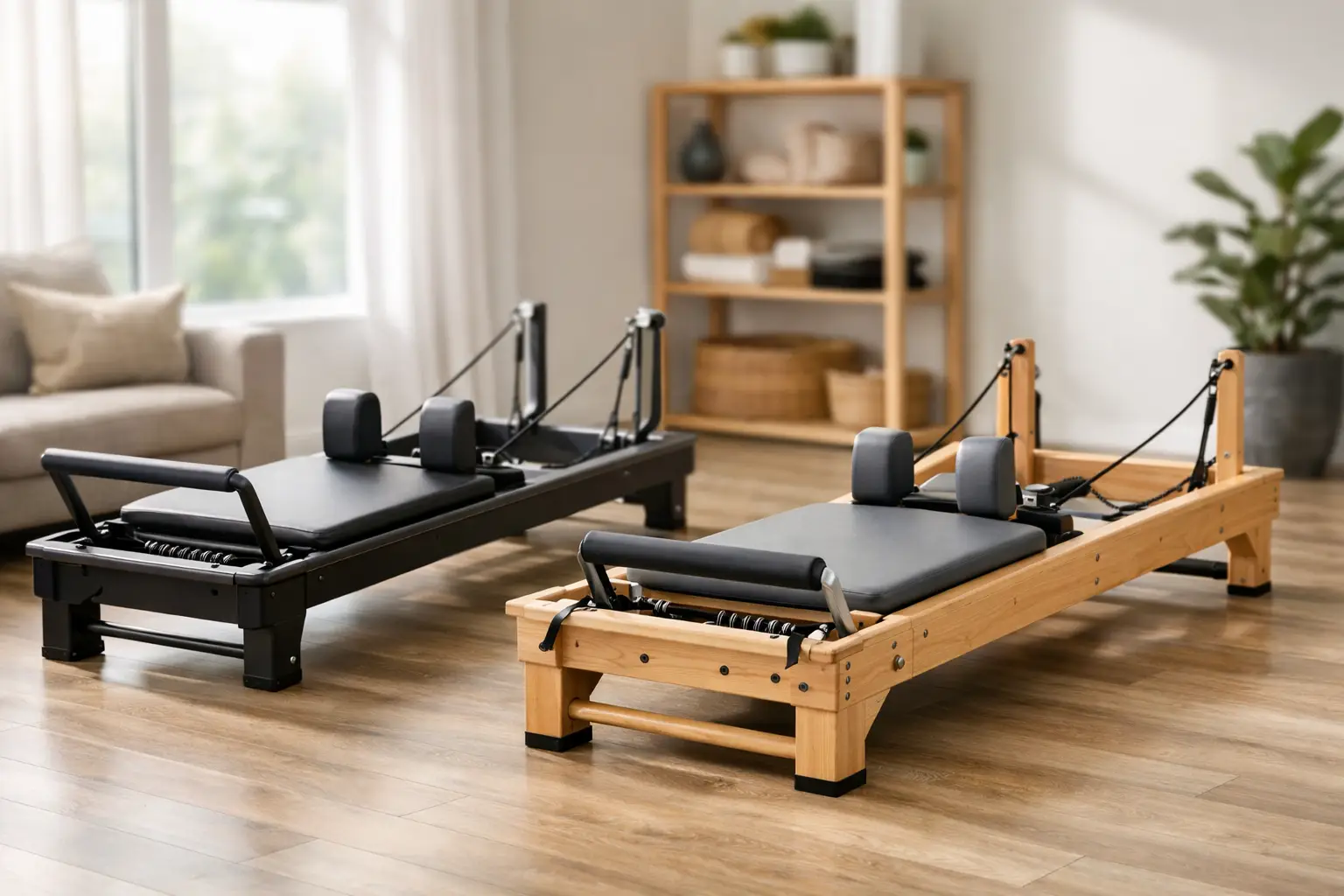
A reformer rental comparison is most useful when you look beyond the monthly payment. Renting can lower the barrier to bringing Pilates home, but the better choice depends on how often you will use the machine, how much space you have, and whether the reformer itself supports the way you want to move. A low monthly rate can feel reassuring at first, yet delivery fees, minimum terms, return conditions, and limited equipment options can change the value quickly.
For some households, renting is a sensible trial period that replaces uncertainty with real experience. For others, it becomes an expensive way to postpone a purchase they were already likely to make. The goal is not to treat ownership as automatically better. It is to compare the full commitment clearly enough that your home Pilates routine has room to last.
What a Reformer Rental Actually Includes
Reformer rentals vary more than many first-time shoppers expect. Some local fitness-equipment companies rent commercial-style reformers on a monthly basis. Other programs offer compact home models, sometimes packaged with an app membership, workout library, delivery, and maintenance coverage. Rent-to-own programs are another category altogether: part of each payment may apply toward eventual ownership, but the terms deserve close reading.
The reformer matters as much as the agreement. A rental may be a sturdy, studio-height machine with spring resistance and a traditional moving carriage. It may also be a smaller folding model designed for occasional home use. Neither format is inherently wrong, but they create different training experiences. Carriage length, frame stability, footbar adjustments, spring options, and the availability of a jumpboard or box all affect what you can practice comfortably.
Before comparing prices, ask for the exact model name and its specifications. “Pilates reformer rental” is not a meaningful product description on its own. A machine that feels stable for a taller adult, accommodates progressive resistance, and rolls smoothly under load has a different value than a compact model with limited adjustments.
Reformer Rental Comparison: Monthly Cost vs. Total Cost
Monthly pricing is the most visible number, but it is rarely the number that should make the decision. A rental agreement can include an initial delivery charge, setup fee, recurring equipment fee, optional content membership, damage waiver, pickup fee, and a minimum rental period. If the machine must be returned in its original packaging or from a ground-floor location, that can introduce another practical complication.
A useful comparison starts with the total cost over the period you realistically expect to use a reformer. If you are testing the format for three months, add every required cost for those three months. If you already know you want a consistent home practice for a year or longer, compare 12, 18, and 24 months of rental payments against the purchase price of a suitable reformer.
For example, a $150 monthly rental may seem more manageable than a $2,500 purchase. Over 12 months, though, that is $1,800 before any delivery, membership, or return fees. At 18 months, the rental cost may exceed the price of a well-built entry-level reformer that you could continue using for years. The break-even point is not the same for every model, but calculating it protects you from focusing on affordability this month while overlooking cost over time.
Rent-to-own plans require an additional calculation. Find the total of all scheduled payments, not just the amount credited toward the purchase. If that total is substantially higher than buying the same model outright, the convenience of installment payments may still be worthwhile, but it is not a discount.
The Trade-Offs That Do Not Show Up on the Price Tag
Renting shifts certain responsibilities to the provider. If the carriage develops a problem or a spring needs replacement, maintenance coverage may be included. That can be reassuring if you are new to equipment ownership or do not want to coordinate repairs. It also gives you a way to assess whether reformer Pilates fits your body, schedule, and home before committing significant money.
The trade-off is control. Rental inventory may be limited to one or two models, and you may not be able to select the color, height, upholstery, accessories, or resistance package that suits you best. You might receive a used machine with cosmetic wear, which is generally reasonable in a rental arrangement, but it should still be clean, functional, and safe.
There is also the question of availability. A rental company may have an appealing rate but no immediate inventory in your area, particularly for heavier studio-style frames. If a provider delivers only within a limited radius, confirm that your ZIP code qualifies before investing time in the comparison.
Your Home Space Changes the Answer
A reformer is not a piece of equipment you can casually tuck behind a sofa once the novelty wears off. Even folding models need enough floor area for the carriage to travel freely and enough clearance for getting on and off the machine safely. Measure the room, doorways, hallways, and any stairs before delivery day.
This is especially relevant to rentals because returns can be less convenient than deliveries. A provider may bring the reformer into a room, but its pickup policy may require a clear path, scheduled access window, or assistance moving equipment from an upstairs space. Read the terms with the same care you would use for a furniture delivery.
If your home has limited space, a short rental can be an excellent test. You will learn whether you can leave the machine set up, whether folding it feels realistic after a busy day, and whether the location supports regular practice. A reformer used three times a week in a dedicated corner is usually more valuable than a premium model stored inconveniently and rarely opened.
Who Renting Makes Sense For
Renting tends to work best for people who have a genuine question that a few weeks of studio classes cannot answer. Perhaps you have been practicing mat Pilates and want to experience spring-based resistance at home. Perhaps you are moving soon, testing whether a compact model fits your space, or returning to movement after a change in routine and want flexibility before making a larger purchase.
It can also suit temporary needs, provided your healthcare professional has cleared the activity. Someone rebuilding a consistent routine after a period away from exercise may appreciate the lower initial cost and included maintenance. The reformer should support controlled, progressive movement, not pressure you into an intense schedule just to justify the rental.
Renting is less compelling when you already practice consistently, have adequate space, and know the features you need. In that situation, a purchase often offers better long-term value, broader model choice, and the ability to choose accessories that match your goals. Owning also means you can sell the reformer later if your needs change. Well-maintained equipment from an established manufacturer may retain some resale value, while rental payments do not create an asset unless the agreement specifically includes ownership.
Questions to Ask Before You Sign
The clearest rental agreements make the full cost and process easy to understand. If a company cannot answer practical questions directly, treat that as useful information. Before committing, confirm these details:
- What are the delivery, setup, pickup, and cancellation fees?
- Is there a minimum rental period or a penalty for early return?
- What exact reformer model will you receive, and is it new or previously rented?
- Which maintenance issues are covered, and what counts as customer damage?
- Are a box, jumpboard, platform extender, and other accessories included or available?
- Does the monthly price require a separate workout membership?
Also ask about the return condition standard. Normal signs of use should be expected, but an unclear damage policy can make a low-cost rental feel riskier. Take photos when the reformer arrives, inspect the upholstery, carriage, ropes or straps, wheels, and springs, and keep a copy of the agreement. This is not overly cautious. It is basic consumer protection for a large piece of equipment moving in and out of your home.
Compare the Training Experience, Not Just the Contract
The best decision is the one that makes Pilates easier to practice consistently. A rental with a smooth carriage, sufficient adjustability, and a manageable monthly commitment may be a better starting point than buying the cheapest available reformer. At the same time, a rental that limits your comfort, takes up an unsuitable room, or costs nearly as much as ownership after several months may not serve your long-term goals.
Think about the practice you want six months from now. If you envision short, steady sessions that support mobility, posture, strength, and confidence, choose equipment and terms that make those sessions easy to repeat. Better information leads to better Pilates choices, and a careful comparison now can leave more room for the part that matters most: showing up for your practice.