
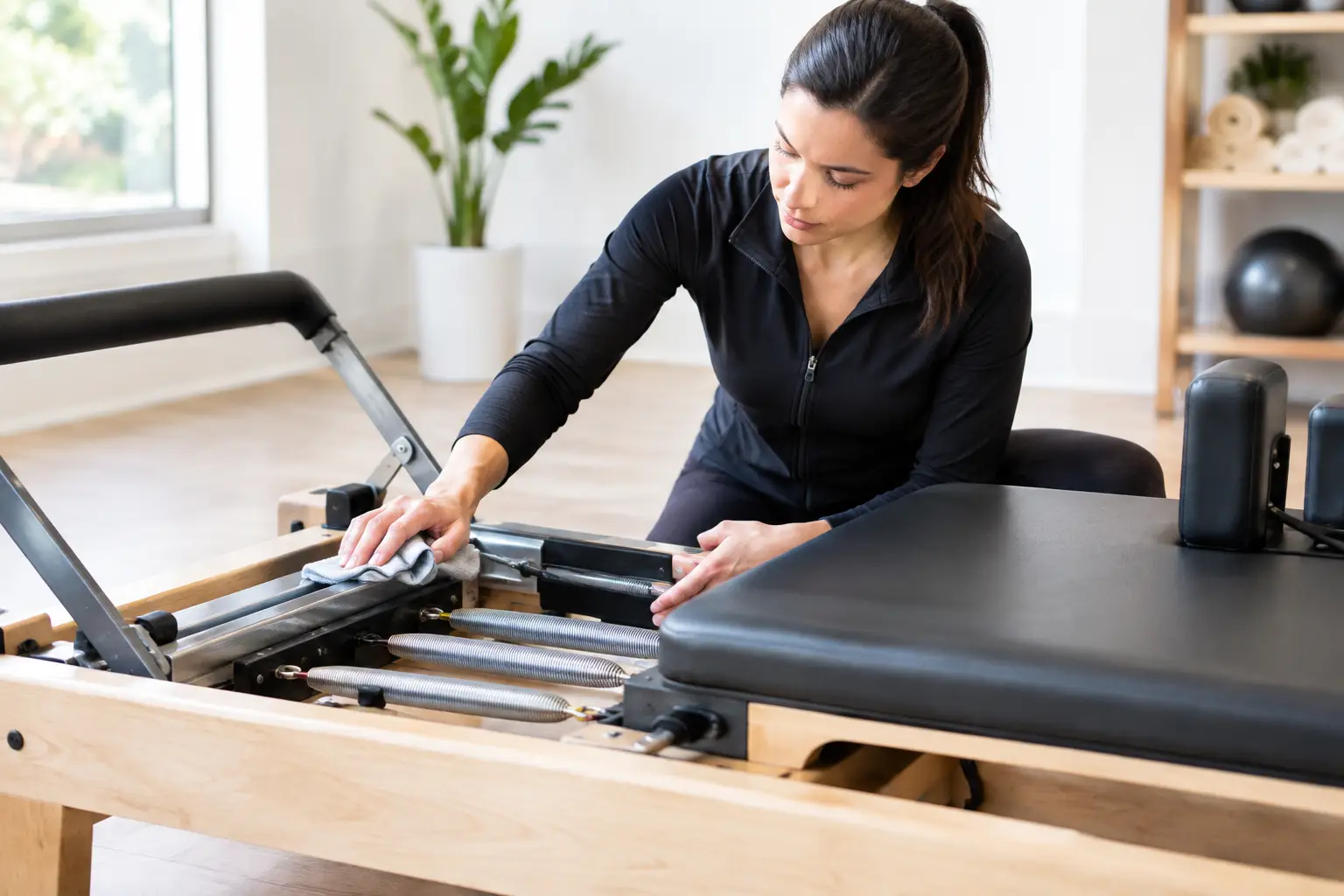
A reformer should feel quiet, controlled, and predictable. When the carriage starts catching, a strap feels rough in your hands, or a spring connection no longer inspires confidence, small maintenance tasks have become larger ownership questions. Consistent reformer maintenance protects the experience you bought the machine for: smooth movement, dependable resistance, and a safe place to practice at home.
For most home owners, care does not require mechanical expertise or a complicated routine. It does require attention. A reformer is a moving piece of fitness equipment with springs, wheels, rails, straps, upholstery, and hardware that work together under load. The best approach is to clean it regularly, inspect high-wear parts before they become problems, and know when a professional should take over.
Why Reformer Maintenance Matters
A Pilates reformer can last for many years, but its lifespan depends on more than frame material or purchase price. Dust on rails can affect carriage travel. Body oils and sweat can shorten the life of upholstery and footbar padding. Springs and straps experience repeated tension, which means they need periodic inspection even when they appear to be working normally.
There is also a safety reason to stay consistent. A worn loop, frayed rope, loose fastener, or damaged spring may fail during an exercise, especially when you are pulling against resistance or standing on the carriage. That does not mean owners should become anxious about every sound. It means a two-minute visual check can be as much a part of a home practice as setting the footbar and choosing springs.
Maintenance also matters if long-term value is part of your purchase decision. A well-kept reformer is easier to sell, gift, or trade up from than one with stained upholstery, neglected rails, and missing parts. Premium equipment often holds value better, but condition still determines what a future buyer will pay.
Reformer Maintenance Starts With the Right Cleaning Routine
Cleaning should be frequent and gentle. After each use, wipe down the carriage upholstery, headrest, shoulder rests, footbar, and any handles you touched with a soft cloth and a cleaner approved for your reformer’s materials. Many manufacturers recommend a mild soap-and-water solution or a nonabrasive, nonbleach disinfecting option. Harsh household sprays, alcohol-heavy products, and abrasive pads can dry out vinyl, discolor foam, or damage finishes over time.
Pay attention to the areas that collect perspiration but are easy to overlook: underneath the headrest, along the edge of the carriage, around shoulder rests, and on loops and ropes. Let surfaces dry fully before covering or storing the machine. Moisture trapped under a cover can contribute to odors and premature wear.
The rails need a different kind of care. Use a dry or lightly damp microfiber cloth to remove lint, pet hair, and dust. Do not assume that lubricant will solve a rough carriage. On many modern reformers, excess lubricant attracts debris and can create more friction. Follow the manufacturer’s instructions precisely, because the right treatment varies by rail material and wheel system.
Protect Upholstery and Soft Goods
Upholstery is often the first part of a home reformer to show daily use. Keep sharp objects, metal jewelry, and pets away from the carriage when possible. Leggings with zippers, decorative studs, or rough seams can scuff vinyl. A clean towel can add a layer of protection during sweaty workouts, but it should not substitute for wiping the surface afterward.
Straps, loops, and ropes deserve the same attention. Check fabric straps for thinning, frayed stitching, stiff spots, and discoloration. Inspect ropes for flattening, loose fibers, or uneven length. Replace worn soft goods promptly with manufacturer-compatible parts. A lower-cost substitute may not match the original length, attachment method, or load rating.
Inspect the Moving Parts Before Problems Escalate
A quick inspection once a week is reasonable for a frequently used home reformer. If you practice once or twice weekly, a monthly inspection may be enough, provided you clean the machine after use and remain alert to changes in feel.
Start with the springs. Look for gaps, distortion, rust, stretched coils, and worn or damaged clips. Springs should connect securely at both ends and sit in their intended position without twisting. Never try to repair a spring yourself, stretch it back into shape, or use one that looks compromised. Springs are load-bearing parts, and replacement is the safer choice.
Then move to the carriage. It should travel smoothly and return evenly without a scraping sound, side-to-side wobble, or sudden resistance. A faint rolling sound may be normal for your model, particularly after it has been moved or stored. Grinding, clicking, or a noticeable change in resistance is not something to ignore. First clean the rails and check for visible debris. If the issue persists, consult the manual or arrange service.
Check the footbar, risers, shoulder rests, platform extender, jumpboard, and any other accessories for secure placement. Fasteners can loosen gradually through normal use. Tighten only the components your manufacturer identifies as user-serviceable, using the recommended tool and method. Over-tightening hardware can strip threads or damage the frame.
A Practical Care Schedule for Home Owners
The right schedule depends on how often the reformer is used, how many people share it, whether pets are nearby, and where it is kept. A machine used daily in a sunny multipurpose room will need more attention than one used twice a week in a climate-controlled dedicated space.
A simple rhythm keeps the work manageable:
- After every session, wipe high-touch upholstery, handles, and the footbar; remove visible hair or debris from the carriage and rails.
- Once a week, inspect springs, ropes, straps, clips, and moving parts for damage or changes in performance.
- Once a month, clean around the frame and under the carriage, check user-serviceable hardware, and test all adjustments.
- Once or twice a year, perform a more thorough review and schedule professional service if your brand recommends it or the machine gets heavy use.
Keep a short maintenance note on your phone or in your workout area. Record the date you replaced springs or straps, noticed a noise, tightened approved hardware, or booked service. This is particularly useful for owners who purchased a used reformer, where the prior maintenance history may be unclear.
Storage and Room Conditions Affect Longevity
Where you keep a reformer matters more than many buyers expect. Ideally, place it on a level surface in a dry, temperature-stable room with enough clearance to use it safely. Persistent humidity can contribute to corrosion on metal components. Direct sunlight can fade upholstery and dry out materials. Garages, screened porches, unfinished basements, and storage sheds are not automatically unsuitable, but they bring more temperature swings, dust, moisture, and pest exposure.
If your model stores vertically or folds, use only the manufacturer-approved storage position and locking process. Verify that attachments are removed or secured as instructed. Vertical storage can be an excellent choice for a smaller home, but convenience should not lead to hurried handling. A reformer is heavy and awkward to move, particularly models with solid wood frames or tower attachments.
Avoid dragging the frame across flooring. Use the designated wheels or lifting points, and ask for help when moving a large machine. Damage from moving is common because the reformer may look compact while still weighing well over 100 pounds.
When to Call a Technician
Some upkeep belongs to the owner. Other tasks should stay with a qualified technician or the manufacturer’s service team. Contact them when a spring is damaged, a carriage continues to stick after cleaning, wheels appear worn, a frame has loosened or cracked, or ropes no longer track evenly through pulleys. The same applies if a reformer has been dropped, exposed to water, or stored for a long period in poor conditions.
This is also the time to check warranty terms. Using unauthorized replacement parts or making unapproved modifications can affect coverage. If your reformer is still under warranty, document the issue with clear photos and a short description of when it occurs before attempting a repair.
A home reformer is not meant to demand constant attention. With regular cleaning, thoughtful inspection, and prompt action when something changes, it can remain a reliable part of your movement routine for years. Treat maintenance as a small extension of your practice: a few calm minutes that help every session feel safer, smoother, and worth returning to.