
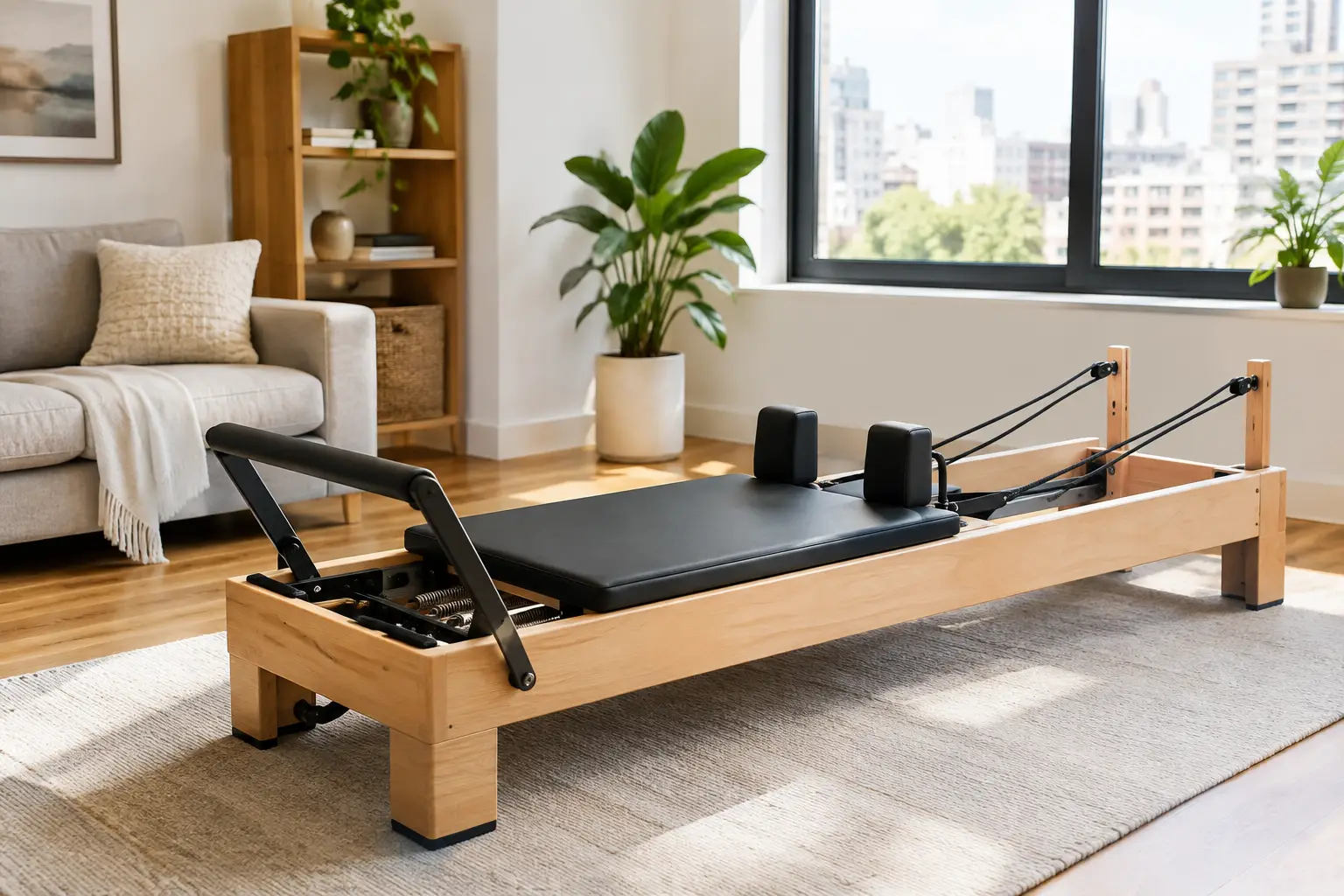
A reformer does not need a dedicated home gym to earn its place in your routine. The most useful small apartment reformer examples start with an honest look at how you live: where you can clear floor space, how often you plan to practice, and whether putting equipment away after each session feels manageable.
A compact setup can support excellent Pilates work, but small-space buying involves more than choosing the shortest reformer. Carriage travel, frame stability, spring resistance, storage requirements, and the room needed around the machine all affect whether a reformer will feel like a practical part of your home or an expensive obstacle.
Small Apartment Reformer Examples by Layout
The studio apartment wall setup
In a studio, the best reformer location is often along the longest uninterrupted wall. A low-profile model can sit parallel to the wall when stored, then be pulled into the center of the room for use. This approach works especially well when the living area doubles as your workout space and you can move a coffee table or lightweight chair before class.
Plan for more than the reformer’s frame length. You need clearance at the footbar end for getting on and off, room beside the carriage for standing work, and enough open space to use straps without hitting furniture. Measure your usable exercise area with furniture in its normal position, not an empty-room ideal.
This arrangement is a good match for someone who practices two or more times a week and wants a full-length carriage experience without keeping the reformer permanently centered in the room. The trade-off is setup time. If moving furniture feels like a major project, even a well-chosen machine may go unused.
The folding reformer beside a sofa or bed
A folding reformer is one of the most familiar small apartment options because it can reduce its footprint between sessions. In a one-bedroom apartment, it may live beside a sofa, behind a sectional with adequate clearance, or along the open side of a bed. For many households, the ability to reclaim the floor matters more than having the heaviest commercial-style frame.
Not every folding reformer folds in the same way. Some collapse flat enough to roll beneath a higher bed, while others fold upward and still need a dedicated wall position. Check the stored dimensions, wheel placement, folding mechanism, and total weight before assuming it will be easy to move alone.
This is often the right example for a renter who values flexibility. It can also suit beginners who are still deciding how central reformer Pilates will become in their routine. The compromise is that folding joints add moving parts, and lighter folding models may not feel as planted during more advanced work. A smooth carriage and secure locking mechanism matter more than a dramatic folded photo.
The vertical-storage corner
Some reformers are designed to stand vertically when not in use. In a narrow living room or home office, that can turn an exercise machine into a compact piece of equipment that occupies one corner. The key word is designed. Only store a reformer upright if the manufacturer specifically approves it and provides the required safety method.
A vertical-storage model generally needs a clear wall, a stable floor, and sufficient ceiling height to raise it safely. It may also need more space than expected during the transition from horizontal to vertical. Consider door swings, ceiling fans, wall art, shelves, and low light fixtures before committing to this format.
For a person who wants a more substantial frame but has limited floor area, vertical storage can be an appealing middle ground. It is less convenient than leaving a reformer open, but it usually feels more realistic than trying to slide a full-size machine under furniture after every workout.
The bedroom reformer with a permanent lane
A bedroom can be the most workable reformer room when the living space is busy, shared, or simply too small. Rather than trying to fit the machine beside the bed at an angle, create one clear lane along the side or foot of the bed. A reformer that remains set up is easier to use for short morning sessions, focused strength work, or a 20-minute mobility practice after work.
This layout benefits from restraint. Keep the area around the reformer calm and functional, with a small basket for straps, loops, and a cleaning cloth rather than a collection of bulky accessories. A jumpboard, sitting box, tower attachment, and platform extender can expand your exercise options, but each item needs a home. In a small room, accessories that remain on the floor can quickly erase the benefit of a compact machine.
A permanent bedroom setup is best for a solo adult or a household with clear boundaries around the space. It may not work well in a bedroom shared with a partner who has a different schedule, or where the reformer blocks closets, drawers, or an emergency exit route.
The multipurpose office and workout room
A work-from-home room can support a reformer if the desk and chair arrangement leaves a real exercise zone, not just a narrow strip of carpet. A compact, low-height reformer placed along one wall may make sense, especially if it can roll out far enough for use and return to storage without disassembling your office.
This example works well for people who prefer planned workouts. You can close the laptop, clear the chair, and use the same room for a lunchtime class. Still, avoid treating a reformer as office furniture. Cords, rolling desk chairs, filing cabinets, and hard-edged furniture create trip hazards and reduce the usable range around the machine.
Choose the Reformer Around the Routine, Not the Room Photo
Small-space marketing can make nearly any machine appear apartment-friendly. The more useful question is whether its size and storage method fit your actual habits. A reformer that folds but requires two people to lift is not especially convenient for a solo renter. A model that stores upright may save floor space but may be a poor choice in a low-ceiling apartment.
Start with three measurements: the open footprint, the stored footprint, and the clearance needed to move from one position to the other. Then account for your body. Taller users usually need more carriage length and room at both ends of the reformer. A compact machine may suit a smaller practitioner beautifully while feeling restrictive for someone with longer legs or a broader range of motion.
Frame height also changes the experience. Lower reformers can be easier to store visually in a living room, but they may be less comfortable for anyone with knee, hip, or balance limitations. A higher carriage can make transitions easier, yet it may look more prominent and reduce under-bed storage possibilities. Neither is automatically better.
What to Check Before Ordering
Before purchasing, use painter’s tape to mark the reformer’s open dimensions on your floor. Walk around the outline, lie down where the carriage will travel, and open nearby doors and drawers. This simple test reveals problems that an online product photo cannot.
Also confirm delivery details. Apartment elevators, stairwells, building rules, and package weights can affect the real cost and effort of ownership. If you expect to move within a year or two, consider whether you can transport the reformer safely or whether a lighter, more portable design is worth the trade-off in features.
Finally, think about sound. Reformer Pilates is generally apartment-friendly, but rolling carriages, footbar adjustments, and jumpboard work can transmit vibration through floors. A protective mat may help reduce floor contact and protect the surface beneath the frame, though it will not make high-impact jumping silent. If you share walls or live above another unit, choose your workout style accordingly.
The right apartment reformer is not the one that disappears completely. It is the one you can set up safely, use consistently, and store without resenting the process. When the space supports your routine instead of competing with it, a modest corner of an apartment can become a lasting Pilates practice.