The best Pilates outfit is rarely the most technical or expensive one. It is the one that lets you breathe fully, move through every range of motion, and focus on your body rather than tugging at a waistband or adjusting a loose top. If you are deciding what to wear to Pilates, start with comfort and coverage, then make small adjustments for a mat class, reformer session, studio temperature, and your own preferences.
Pilates asks for controlled movement rather than high-impact intensity, but that does not mean clothing is an afterthought. You may be lying on your back with your legs overhead, kneeling on a carriage, rolling through your spine, or working one leg at a time. Clothing that stays in place makes these positions more comfortable and helps you move with confidence.
What to Wear to Pilates: The Simple Starting Point
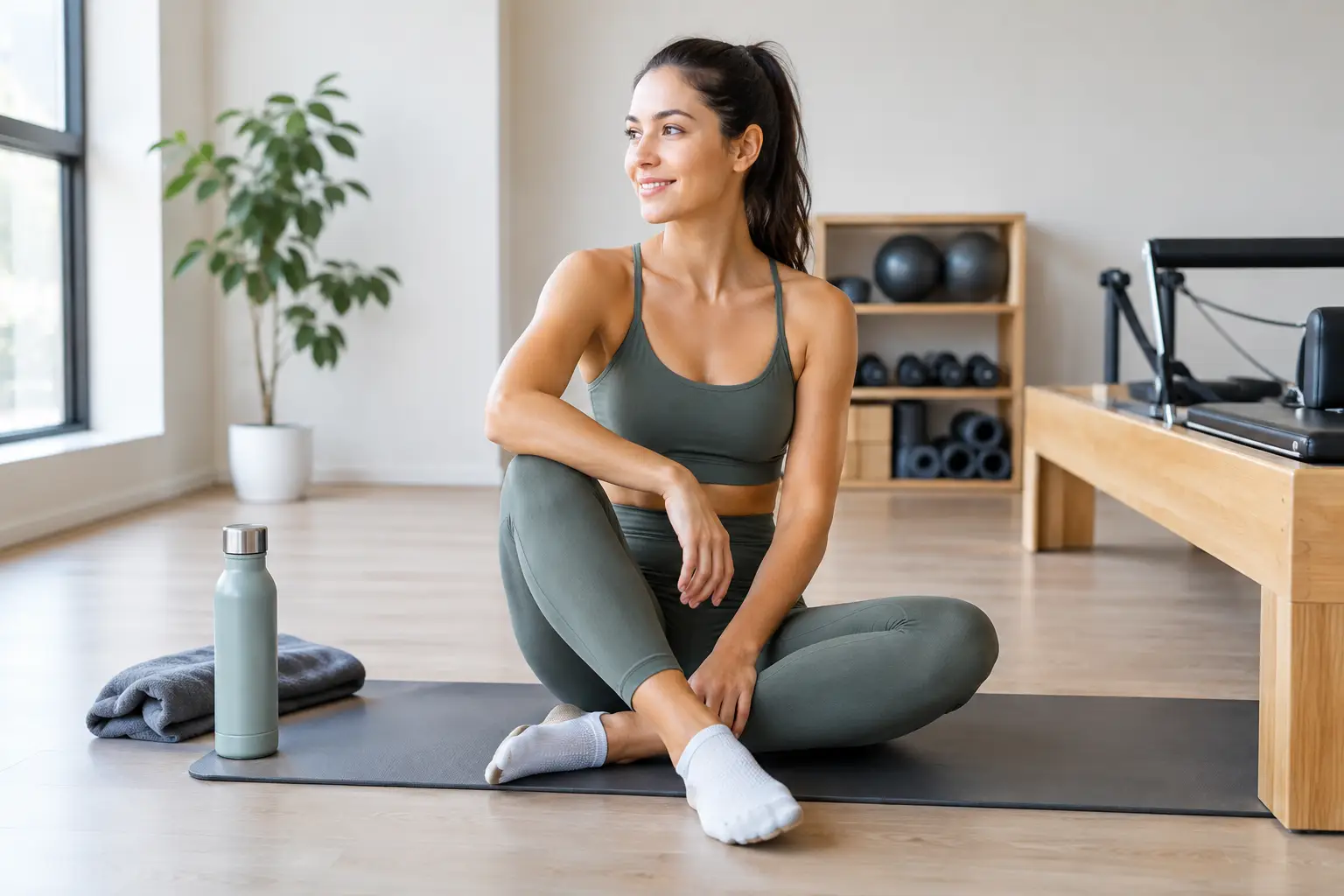
For most people, a fitted workout top and flexible leggings or bike shorts are a dependable Pilates uniform. Choose pieces that allow unrestricted movement without becoming so loose that they shift, bunch, or expose more than you intend during inversions and rolling exercises.
Your outfit does not need to compress or sculpt your body to be appropriate for class. In fact, extremely tight clothing can make it harder to take a relaxed, three-dimensional breath into the ribs and abdomen. Look for light-to-medium support, a waistband that feels secure without digging in, and fabric that moves easily with you.
A supportive sports bra is useful for many practitioners, especially in a reformer class where transitions can be quick. The level of support depends on your comfort and chest size, but high-impact running bras are not automatically better. A softer longline bra or medium-support style often feels more comfortable for the slower, more precise nature of Pilates.
For tops, a fitted tank, T-shirt, or long-sleeve performance layer usually works well. If you prefer a roomier shirt, consider one that is long enough to stay put when you raise your arms or bend forward. Some people also like a top with a slightly higher neckline for reassurance during plank work and forward folds.
Why Fit Matters More Than Fashion
Pilates instructors use visual cues to help you understand alignment. A reasonably close-fitting outfit can make it easier for an instructor to see the position of your spine, pelvis, knees, and shoulders, particularly in a small-group or private setting. This does not mean you need to wear body-hugging clothing if that is not your preference. It simply means that very baggy layers can obscure movement and occasionally get caught on reformer springs or straps.
Leggings are popular because they provide coverage and stay in place for exercises such as leg circles, bridges, and feet-in-straps work. A high-rise waistband can be comfortable, but the best choice depends on your torso length and sensitivity around the stomach. Some people feel supported in a high-rise style; others find that it rolls when they flex their hips. Test the waistband by sitting, squatting, and bringing one knee toward your chest before wearing it to class.
Bike shorts can be equally practical, especially in warmer studios or at home. Choose a pair with enough inseam length that the legs do not ride up during side-lying exercises. If you are new to Pilates, leggings may offer a little more ease while you learn positions that involve open hips, kneeling, and moving the legs overhead.
Avoid pants with bulky pockets, hard zippers, drawstrings, or raised seams along the lower back. On a mat, these details can be distracting. On a reformer, they can press uncomfortably against the carriage or interfere with a smooth transition.
Socks, Shoes, and Reformer Safety
Most Pilates classes are done without shoes. Bare feet give you direct feedback from the floor or reformer footbar and allow your toes to spread, articulate, and help stabilize your body. If a studio permits barefoot practice and you are comfortable with it, that is often the simplest option.
For reformer Pilates, grip socks are a smart investment. They have non-slip grips on the sole, providing more traction on the carriage and a more hygienic shared-studio option than bare feet. They can also help if your feet tend to sweat or you feel less secure during standing or balance-focused exercises.
Not all grip socks feel the same. Some are thin and close-fitting, while others have compression through the arch, separated toes, or a higher ankle cuff. The best pair is one that does not slide inside the shoe-like shape of the sock or bunch under the toes. A secure fit matters more than decorative straps or elaborate cutouts.
Regular socks can be slippery on a reformer and are not a safe substitute. Athletic shoes are also generally not worn unless you are taking a specialized class that specifically calls for them. If you are unsure, check the studio policy before your first visit.
Choose Fabric for the Class You Are Taking
For an at-home mat workout, cotton blends can be perfectly comfortable, especially if you are practicing at a gentle pace in a cool room. For a heated studio, longer reformer class, or a session that makes you sweat, moisture-wicking synthetic blends may feel more comfortable and dry faster afterward.
Fabric preferences are personal. Some people dislike the slick feel of performance leggings, while others find cotton stays damp and heavy. The practical test is simple: Can you move in the fabric without it becoming see-through, sliding down, trapping too much heat, or distracting you from your workout?
If you are building a small home Pilates wardrobe, two or three reliable outfits are more useful than a closet full of trendy activewear. Prioritize pieces you would be happy to wear for a 20-minute mat session as well as a full reformer workout. That flexibility supports consistency and keeps the cost of getting started reasonable.
Layers Are Useful Before and After Class
Pilates classes often begin with slower breathing and mobility work, and studios can feel cool before your body warms up. A light zip-up, wrap, sweatshirt, or fitted long-sleeve layer can make the first few minutes more comfortable. Remove it once you are warm, then put it back on for the walk to your car or post-class errands.
For reformer sessions, avoid oversized sweatshirts with dangling strings or loose sleeves once you begin working with straps and springs. A close-fitting layer is less likely to interfere with equipment and makes it easier to move through transitions.
If you practice at home, temperature control may matter even more than clothing style. Keep a light layer nearby rather than turning a session into an excuse to stop because you feel chilly. Small setup choices can make a routine easier to repeat.
What Not to Wear to Pilates
There are few hard rules, but some items create predictable problems. Very loose shorts can shift during leg lifts and inversions. Jeans, stiff lounge pants, and thick seams restrict hip movement. Jewelry can catch on clothing or equipment, while long necklaces may swing into your face during abdominal work.
Strong fragrances are also best avoided in a shared studio. Pilates often takes place in close quarters, and a fragrance-free approach is more considerate for people with sensitivities. Bring water if your class allows it, and tie back long hair so it does not interfere with headrest-supported exercises.
For pregnancy, postpartum recovery, or a body that is changing in any way, comfort deserves even more attention. A soft waistband, nonrestrictive bra, and layers you can adjust may be more useful than buying a standard Pilates outfit. If you are working with an instructor, let them know about any clothing-related discomfort so they can help you modify setup and positioning.
Dress for the Practice You Want to Keep
Your Pilates clothing should make the next class feel easier to attend, not like another purchase decision to overthink. Start with breathable bottoms, a top that stays put, and grip socks if you will use a reformer. From there, notice what feels good in your own body and refine your choices over time.
The right outfit is ultimately the one that lets you pay attention to your breath, alignment, and progress. When your clothing supports the practice instead of competing with it, showing up becomes a little simpler.
Leave a Reply
You must be logged in to post a comment.