
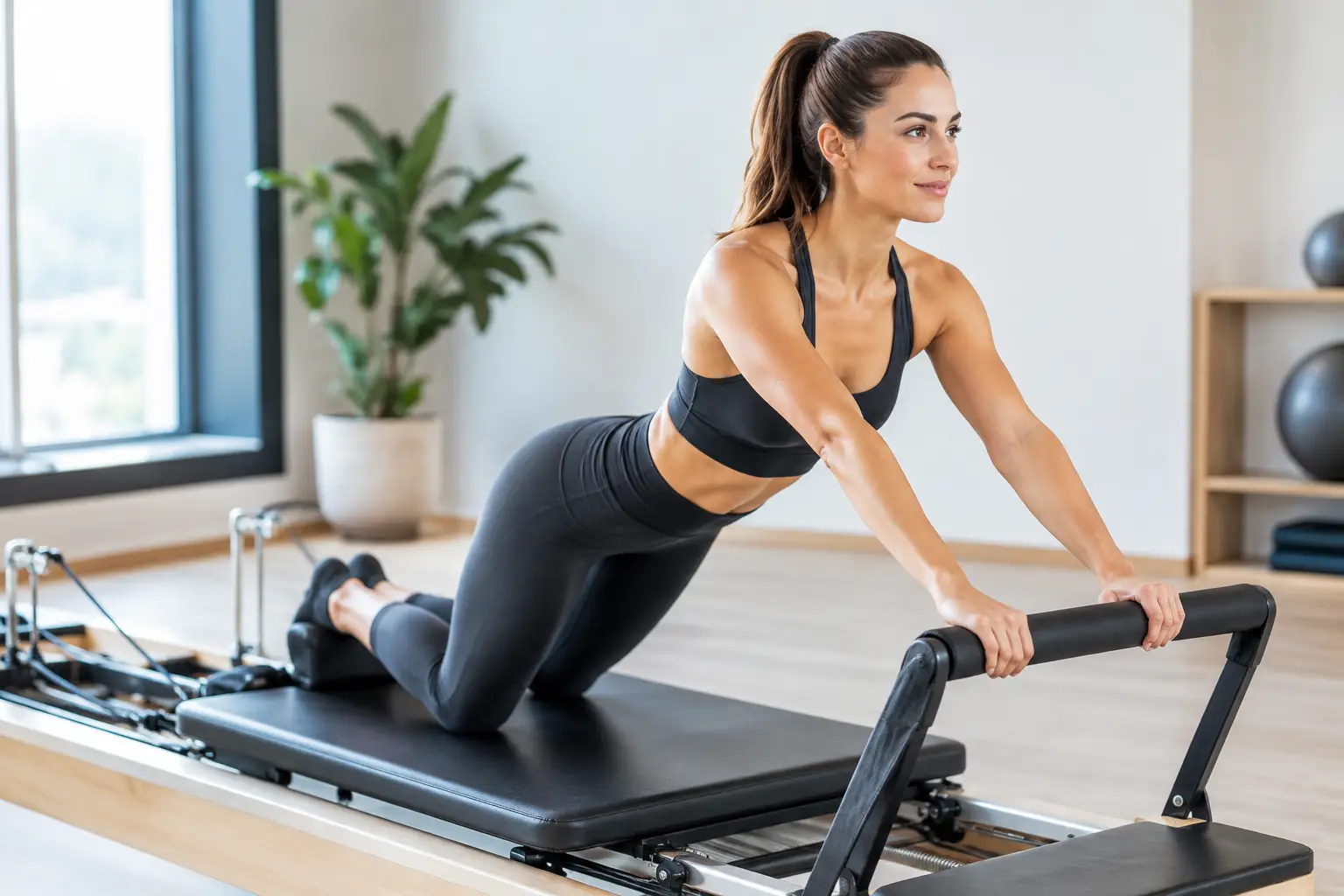
A reformer can make a workout feel markedly different from a mat class: more resistance, more feedback, and often more motivation to stay consistent. But reformer weight loss results are not automatic, and they rarely look like the dramatic before-and-after promises common on social media. The more useful question is whether reformer Pilates can help you build the movement routine, strength, and daily habits that support fat loss over time. For many people, the answer is yes.
What Reformer Pilates Can Do for Weight Loss
Weight loss occurs when, over time, you use more energy than you consume. Reformer Pilates contributes to that equation by increasing physical activity, but its greatest value is often less direct. It can make exercise feel sustainable enough to repeat week after week, which matters far more than an occasional all-out workout.
A well-designed reformer session challenges the legs, glutes, core, back, arms, and smaller stabilizing muscles at once. Springs create adjustable resistance, while the moving carriage requires control through each repetition. Depending on the class format, pace, spring selection, and your experience level, a session may elevate your heart rate while also building muscular endurance.
The calorie burn from a traditional reformer workout is usually moderate rather than extreme. That is not a weakness. Pilates is especially useful for people who do not enjoy high-impact exercise, are returning after time away, or need a lower-impact way to train consistently. A plan you can maintain is generally more valuable than a harder plan you abandon after two weeks.
Reformer Weight Loss Results Depend on More Than Classes
Two people can attend the same reformer class three times a week and see very different changes. Body size, starting fitness level, sleep, stress, medications, nutrition, daily movement, and hormonal changes all influence the outcome. Pilates is part of the picture, not a standalone guarantee.
Nutrition is particularly relevant. You do not need to follow a restrictive diet to benefit from reformer training, but fat loss generally requires an eating pattern that supports a manageable calorie deficit. Adequate protein, fiber-rich foods, regular meals, and enough hydration can make that deficit easier to maintain while supporting recovery. If nutrition has become stressful or overly rigid, working with a qualified registered dietitian can be a more productive next step than adding extra workouts.
Daily activity also matters. A 50-minute reformer class is valuable, but it does not erase the effect of long sedentary stretches. Walking, errands, household movement, standing breaks, and other low-intensity activity can add meaningful energy expenditure without placing more strain on the body. For many adults, combining reformer Pilates with regular walking is a realistic and effective foundation.
What Changes You May Notice First
The scale is only one measure of progress, and it is often the slowest to reflect what a new routine is doing. Early reformer Pilates changes may include better body awareness, improved balance, stronger posture, and greater comfort during everyday tasks such as carrying groceries, climbing stairs, or sitting at a desk.
You may also feel stronger before you look different. Reformer work can improve muscular endurance in the glutes, thighs, arms, and trunk, and increased strength may change how clothes fit even when scale weight is stable. This is one reason progress photos, body measurements, workout notes, and how you feel during daily movement can provide more useful context than weighing yourself every day.
A temporary lack of scale change does not always mean the program is failing. Water retention can fluctuate because of menstrual cycles, travel, sodium intake, muscle soreness, stress, and poor sleep. Looking at trends over several weeks is more informative than reacting to a single number.
How Long Does It Take to See Results?
Most beginners notice better coordination and stronger movement control within a few weeks of regular practice. Visible body-composition changes typically take longer. A reasonable expectation is to assess your routine after eight to twelve weeks, rather than judging it after a handful of classes.
Frequency makes a difference, but more is not always better. Two to four reformer sessions per week is a practical range for many people, particularly when paired with walking or another form of cardio. If you are new to exercise, starting with two sessions can help you learn proper form, recover well, and decide whether the routine fits your schedule.
More experienced exercisers may need a different approach. Reformer Pilates can remain a central part of a weight-loss plan, but some people benefit from adding dedicated cardiovascular training or heavier strength work. This is especially true if their body has adapted to the same class format and resistance levels. The right mix depends on your goals, injury history, preferences, and available time.
A Practical Weekly Framework
Rather than trying to make every workout intense, create a week you can repeat. For example, two or three reformer sessions can provide strength-focused movement and mobility work. Add regular walks on most days, plus one session of moderately challenging cardio if it feels appropriate for your fitness level.
Progress your Pilates sessions, too. Better form should come before heavier springs, but resistance and exercise complexity need to increase gradually for the body to keep adapting. If every home reformer workout feels identical after several months, adjust the programming rather than assuming you need to exercise longer.
Why a Home Reformer Can Help, and When It May Not
A home reformer can support weight-loss goals by removing practical barriers. You do not need to drive to a studio, coordinate class times, or feel self-conscious as a beginner. A 25-minute session at home can be easier to complete consistently than a class that requires a two-hour block of travel, changing, and training.
That convenience needs to be weighed against the investment. A reformer is not a shortcut, and a premium machine will not create results if it becomes an expensive place to store laundry. Before buying, consider whether you enjoy reformer-style movement, have a dedicated or easily convertible space, and can realistically use the equipment several times a week.
For home use, a stable frame, smooth carriage travel, reliable spring resistance, and enough adjustability for your height and experience level matter more than flashy extras. A beginner may benefit from professional instruction first, either in person or through a reputable guided program, to learn alignment and safe spring changes. The Pilates Blog encourages readers to match equipment decisions to their actual routine, not an idealized version of it.
How to Track Progress Without Obsessing Over It
Choose two or three measures that connect to your reason for starting. If fat loss is your main goal, a weekly or biweekly weight trend and occasional waist measurement may be useful. If you also want to feel more capable, record the springs you use, the exercises you can perform with control, or how long you can walk without fatigue.
Keep the process simple. Weighing under similar conditions once or twice a week is often enough for people who find the data helpful. Monthly photos in similar clothing and lighting can show changes that daily mirror checks miss. If tracking increases anxiety, scale back and focus on attendance, strength gains, and energy levels instead.
Be alert to signs that your plan is asking too much. Persistent fatigue, worsening pain, frequent dizziness, missed periods, or an increasingly restrictive relationship with food deserve attention from an appropriate health professional. Pilates should support your health, not become another source of pressure.
The Result Worth Building Toward
The most durable reformer weight loss results usually come from treating Pilates as a practice rather than a punishment. Use the reformer to become stronger, move with more confidence, and make exercise a dependable part of home life. When those pieces are in place, changes in body weight or shape have a much better chance of lasting.
Leave a Reply
You must be logged in to post a comment.