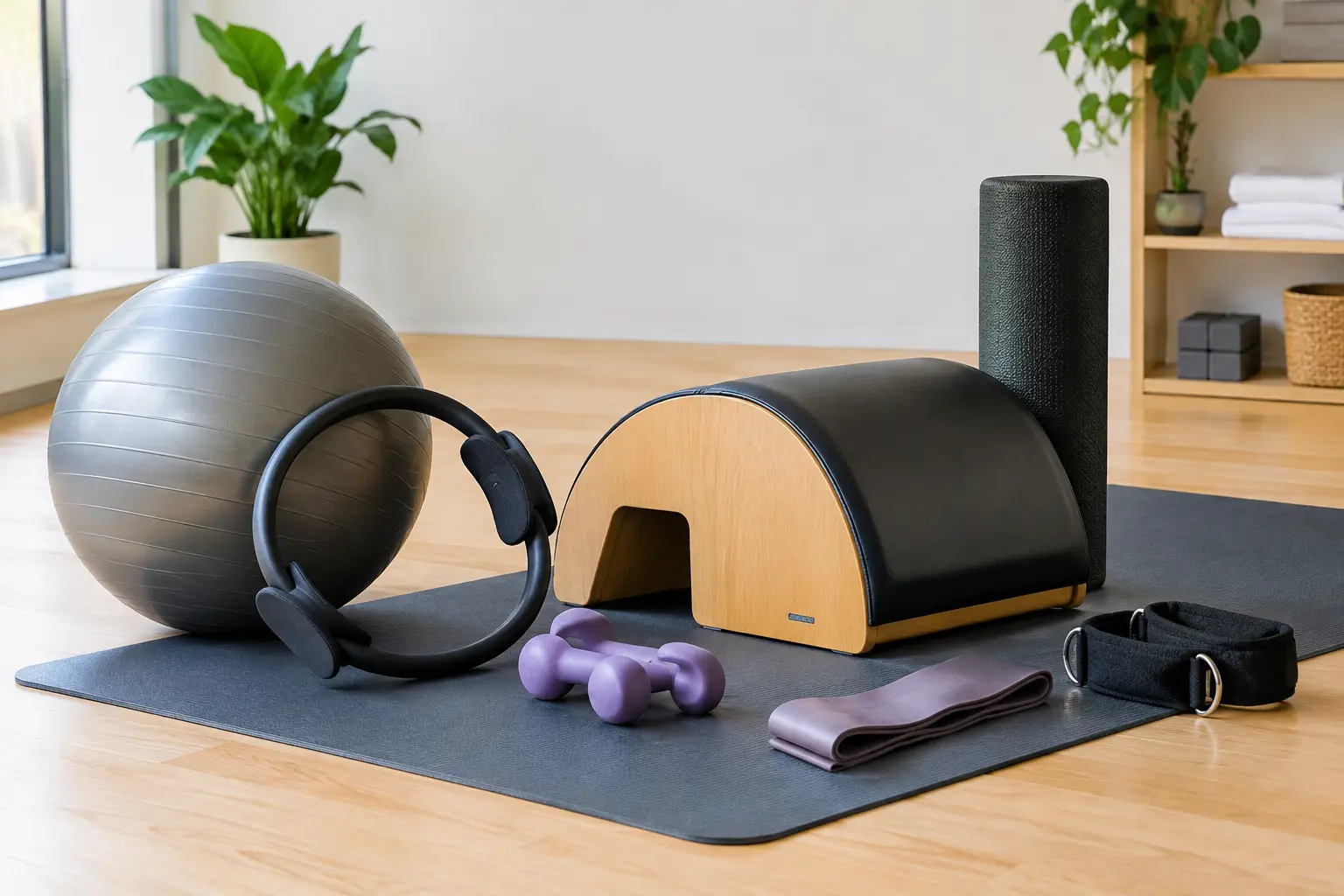
A home Pilates routine rarely needs a closet full of gear. The Pilates accessories worth buying are the ones that make your existing practice more comfortable, better supported, or easier to progress over time. A few well-chosen pieces can add meaningful variety to mat work without creating clutter or asking you to spend like you are outfitting a studio.
The right choice depends on how you practice now. A beginner may benefit most from a supportive mat and a small ball for body awareness, while someone who already uses a reformer may want accessories that make sessions more challenging or accommodate specific mobility needs. Think of accessories as practical tools, not requirements. Pilates itself is not dependent on equipment.
Start With the Accessories That Improve Your Setup
Before adding resistance or complexity, make sure your foundation supports consistent movement. Comfort matters because it affects whether you can focus on alignment, breath, and control instead of shifting around to avoid pressure on your spine, wrists, or knees.
1. A supportive Pilates mat
A Pilates mat is often worth the upgrade from a thin general-purpose exercise mat. Mat Pilates includes frequent rolling, supine work, side-lying exercises, and kneeling positions. A denser mat gives your spine and joints more cushioning without feeling so soft that it interferes with balance.
Look for a non-slip surface and enough length for your body. Thickness is a trade-off: a very thick mat can be comfortable for kneeling but may feel unstable during standing balance work. For most home users, a firm mat around 6 to 10 millimeters thick is a practical middle ground. If you exercise on carpet, you may prefer a slightly firmer mat; on hardwood or tile, more cushioning can be useful.
2. A small Pilates ball
The soft, inflatable ball commonly used in Pilates is inexpensive, easy to store, and more versatile than it appears. Placed between the thighs, ankles, hands, or behind the low back, it provides light resistance and useful feedback about symmetry and muscle engagement.
Its real value is not making every exercise harder. The ball can help you notice whether your legs are rotating outward, whether your ribs are flaring, or whether you are gripping through the shoulders. For beginners, that feedback can make basic movements easier to understand. More experienced practitioners can use it to introduce instability and challenge control.
Choose a ball designed for Pilates or physical therapy rather than a hard playground ball. It should be easy to inflate and slightly compressible. If you have hip, pelvic floor, or knee concerns, use it gently and avoid treating a squeeze as a reason to brace or hold your breath.
3. A resistance band or Pilates ring
A resistance band and a Pilates ring serve different purposes, but either can be a smart next purchase. Bands create adjustable pulling resistance for the arms, back, hips, and legs. They are especially helpful for home practitioners who want more upper-body strength work without buying dumbbells.
A Pilates ring, also called a magic circle, creates light compression or outward pressure. It can bring attention to the inner thighs, glutes, chest, and upper back, but its resistance is usually modest. The ring is best viewed as a cueing tool, not a shortcut to stronger legs.
If you are choosing only one, a set of long resistance bands usually offers more exercise options and more ways to modify intensity. Choose bands with a comfortable grip and clear resistance levels. Avoid wrapping a damaged or cracked band around your feet, and inspect it regularly for wear.
Pilates Accessories Worth Buying for Mobility and Recovery
Pilates asks for control through a comfortable range of motion. Accessories for mobility can be useful when they help you find that range without forcing a stretch. They should support your practice, not become an elaborate pre-workout ritual.
4. Yoga blocks
Yoga blocks are not exclusive to yoga. In Pilates, they can bring the floor closer during seated work, support the head in certain positions, create a stable target for the hands or feet, and make side-lying exercises more comfortable.
They are particularly useful for people with limited hamstring flexibility, wrist sensitivity, or difficulty sitting upright on the floor. Sitting on a block can tilt the pelvis slightly forward and make tall posture easier to access. Cork blocks feel firm and stable; foam blocks are lighter and kinder on the body. A pair gives you more options, although one is enough for most beginners.
5. A small towel or Pilates slider set
A folded towel is one of the most overlooked home-practice tools. It can support the head, pad the knees, assist with hamstring stretches, or slide under the feet on a smooth floor. It costs nothing if you already have one and lets you test whether a movement modification actually helps before buying specialty equipment.
Sliders are a worthwhile upgrade only if you enjoy controlled standing work and have an appropriate floor surface. They can add a carriage-like sliding challenge to lunges, planks, and hamstring exercises, but they also increase the demand on balance and shoulder stability. Beginners should use a wall, countertop, or chair for support rather than assuming sliders are an easy addition.
6. A massage ball or foam roller
A massage ball or foam roller can be useful after Pilates, especially for people who spend long hours sitting or feel persistent stiffness through the upper back, hips, calves, or feet. Neither tool replaces strength, mobility work, or clinical care. Used thoughtfully, though, they can make it easier to settle into movement.
A massage ball is more precise and takes up almost no space. A foam roller covers broader areas and can double as a balance or alignment prop in certain Pilates exercises. Start with a medium-density roller rather than the firmest option. More pressure is not automatically more effective, particularly around tender areas.
Accessories That Make Reformer Training More Practical
If you own a reformer or regularly use one at home, accessories should be chosen around compatibility and safe use. A reformer already provides resistance, support, and movement options, so extra items are rarely essential. The priority is protecting the equipment and making setup easier to repeat.
7. A non-slip reformer mat or platform pad
A thin, non-slip pad can improve comfort for kneeling, planking, or standing work on a reformer platform when the manufacturer permits it. It can also protect upholstery from sweat and reduce direct contact during shared household use.
Avoid thick pads that change your relationship to the carriage, footbar, or shoulder rests. Even a small change in height can affect stability and exercise setup. Check your reformer manual before using anything that covers moving parts, straps, or the carriage surface.
8. Grip socks
Grip socks are a modest purchase that can make reformer sessions feel more secure and hygienic. They are useful for footwork, standing balance work, and any practice where bare feet feel slippery on the platform.
Fit matters more than novelty designs. Socks that bunch under the toes or shift at the heel can be distracting and potentially unsafe. If you practice on a mat, grip socks are optional. Some people prefer bare feet for better sensory feedback and easier toe movement.
9. A storage solution that fits your room
Storage is not glamorous, but it can have a larger effect on consistency than another resistance tool. A narrow basket, wall hook, or low-profile bin keeps bands, balls, socks, and small props visible and within reach. When accessories are buried in a closet, they tend to disappear from the routine.
For reformer owners, measure the room before purchasing storage furniture. You need clear space around the machine for safe entry, spring changes, and full carriage travel. The best accessory setup is one that supports the room’s normal use instead of turning it into a permanent obstacle course.
What You Can Skip, at Least for Now
Weighted ankle bands, specialized balance tools, and large studio-style props can be useful in specific programs, but they are rarely the first Pilates accessories worth buying. They may add novelty, yet they can also complicate movement before you have a solid sense of breath, pelvic position, and shoulder organization.
Be cautious with products marketed as a fast path to sculpting or deep-core activation. Pilates progress comes from consistent, well-executed practice and appropriate progression, not from making every exercise unstable or heavily loaded. If an accessory causes pain, makes you hold your breath, or prevents you from maintaining control, it is not serving the session.
Build a Small Kit Around Your Actual Routine
For most people, a supportive mat, small Pilates ball, and resistance band cover a wide range of at-home needs. Add blocks if floor positions feel limiting, and consider a ring if you enjoy the extra feedback it provides. This is a far more useful starting point than buying every prop featured in a workout video.
If you are building toward reformer training, spend your larger budget on a reformer that suits your space, body, and goals rather than on accessory bundles. Frame quality, carriage movement, resistance system, and long-term serviceability will matter far more than a collection of extras.
Choose the tool that solves a real problem in your practice, then give it time to earn its place. A calm, repeatable setup is usually the one you will keep using.