
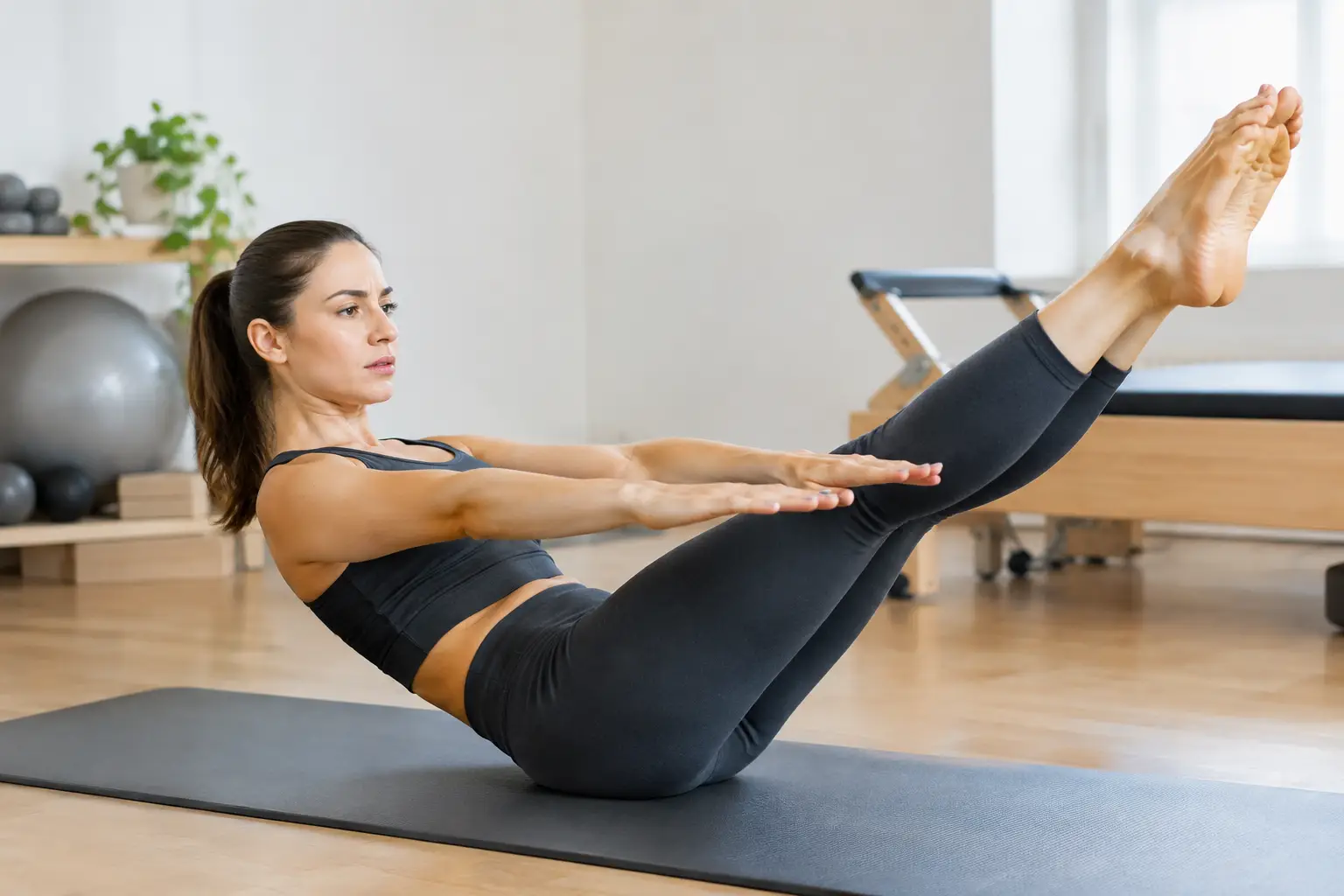
That unmistakable wobble in your thighs during a bridge, plank, or slow leg series can feel surprising, especially when Pilates looks controlled from the outside. So, why does Pilates cause shaking? In most cases, it is a normal sign that your muscles and nervous system are working hard to maintain precise control under fatigue. It is not a requirement for an effective workout, but it can be useful feedback about where your current strength, endurance, and coordination are being challenged.
Pilates often creates this sensation without the heavy weights or fast pace people associate with a difficult workout. The method asks you to move slowly, hold positions with intention, and keep smaller stabilizing muscles engaged while your larger muscles do their job. That combination can expose weak links quickly – and visibly.
Why Does Pilates Cause Shaking in Your Muscles?
Muscle shaking, sometimes called physiological tremor, happens when a working muscle is nearing its current capacity. Your brain sends signals to groups of muscle fibers, called motor units, to create and sustain movement. As fatigue builds, the body has to recruit more fibers and adjust those signals rapidly. The result can be a noticeable tremor.
This is particularly common in Pilates because many exercises involve long periods of tension rather than a single, forceful effort. Holding a tabletop position, hovering the knees, maintaining a side plank, or lowering through a roll-up requires continuous correction. Your body is not only producing force. It is also trying to keep your pelvis, ribs, shoulders, and spine in a specific relationship.
The shake is often most obvious in the abdominals, inner thighs, glutes, quads, calves, and shoulders. These areas frequently work as stabilizers, meaning they may be active even when they are not the body part you think you are training. During a bridge, for example, your glutes create hip extension, while your hamstrings, deep abdominal muscles, and feet help prevent the body from shifting or arching out of position.
Shaking does not automatically mean you are weak. It can happen to experienced practitioners who choose a more demanding variation, use a longer lever, slow the tempo, or increase spring resistance on a reformer. More often, it means the exercise has found the edge of your present capacity.
Slow, Precise Movement Makes Pilates Feel Different
In a traditional strength workout, momentum can sometimes carry you through part of a repetition. Pilates intentionally limits momentum. A controlled five-second lowering phase can be more demanding than several quick repetitions because the muscles have to manage tension through the entire range.
Small range movements can be deceptive, too. A set of tiny pulses in a wall sit or a Pilates V may look modest, but the working muscles have little opportunity to fully rest. Add deliberate breathing and alignment cues, and the nervous system has more information to organize at once.
This is one reason beginners may shake during foundational mat work. They are learning unfamiliar movement patterns while developing endurance. It is also why a person who is generally fit can shake in Pilates. Running, cycling, and weight training build valuable fitness, but they do not always prepare the body for sustained deep-core control, hip stability, or slow shoulder work.
On a reformer, the moving carriage adds another layer. Springs can provide assistance or resistance depending on the exercise, but they also require control. A carriage that moves too quickly or unevenly gives immediate feedback. The tremor may appear as you work to keep it steady, especially in single-leg work, kneeling exercises, or planks.
Is Shaking During Pilates a Good Sign?
It can be a normal sign of effort, but it is not a scorecard. A productive Pilates session does not need to leave every muscle trembling. Chasing the shake can encourage people to hold positions too long, grip through the neck or hips, or sacrifice form for intensity.
A better question is whether you can still move with control and breathe normally. Mild to moderate shaking that appears near the end of a challenging set, then settles when you rest or modify the exercise, is usually within a reasonable training response. If you can maintain good alignment, it may simply indicate that you are building capacity.
If shaking begins early, becomes dramatic, or causes your form to unravel, scale the movement back. Shorten the lever, reduce the range of motion, choose a lighter spring, lower the number of repetitions, or take a brief pause. Those adjustments are not shortcuts. They help you train the intended muscles without reinforcing compensation patterns.
For example, if your legs shake during a bridge, try lowering the height of the lift and placing your feet slightly farther from your body. If your arms shake in a plank, bring your knees down or elevate your hands on a stable surface. The right version is the one that lets you feel effort while keeping your shoulders, spine, and breath organized.
Other Reasons You May Feel Shaky
Muscle fatigue is the most common explanation, but context matters. A shaky feeling can be stronger when you are under-fueled, dehydrated, sleep-deprived, stressed, or returning to exercise after time away. A tough class after a long workday may feel very different from the same class when you are rested and have eaten regularly.
Low blood sugar can cause whole-body shakiness, sweating, lightheadedness, headache, irritability, or difficulty concentrating. That is different from a localized quad tremor in the final repetitions of an exercise. If you have not eaten for many hours, a small snack with carbohydrate and protein before a workout may help, depending on your preferences and medical needs.
Caffeine can also amplify tremors for some people. So can anxiety, certain medications, and medical conditions affecting the nervous system, thyroid, or blood sugar regulation. Pilates may not be the underlying cause in those situations. It may simply be the moment when you notice the symptom.
How to Respond Without Losing the Benefit
Start by giving the shake information rather than drama. Notice where it happens, how quickly it appears, and whether your alignment changes. This creates a practical baseline you can use over time.
Then adjust the dose of the exercise. Pilates works best when challenge and control are kept in balance. You might perform fewer repetitions with better form, rest for two or three breaths between sets, or choose an intermediate variation only after you can perform the foundational version consistently.
Breathing is especially useful here. Many people unintentionally hold their breath when an exercise gets hard, which can increase unnecessary tension. Try a steady exhale through the effort, keeping the jaw, neck, and hands as relaxed as possible. You are not trying to eliminate all effort. You are directing it to the muscles meant to work.
At home, equipment setup can affect how much shaking you experience. On a reformer, confirm that springs are attached evenly and that the carriage, footbar, and headrest are set appropriately for the exercise. A heavier spring is not always harder, and a lighter spring is not always easier. In some standing, kneeling, or unilateral movements, lighter resistance can demand more stability because the carriage is less supported. Follow the exercise instructions for your specific reformer rather than assuming more resistance equals more benefit.
Progress is usually quiet. Over several weeks, you may notice that the shake begins later, settles faster, or no longer disrupts your form. You may also be ready for a slower tempo, a larger range, or a more complex variation. Those are more meaningful markers than trying to make every set feel maximal.
When Shaking Is a Reason to Stop and Seek Advice
Stop the exercise if shaking comes with sharp pain, numbness, tingling, dizziness, faintness, chest pain, unusual shortness of breath, confusion, or loss of coordination. Rest, hydrate if appropriate, and seek urgent medical care for severe or sudden symptoms.
It is also worth speaking with a clinician before continuing if tremors happen frequently outside exercise, occur at rest, are new or worsening, affect one side of the body more than the other, or persist long after your workout ends. This is particularly relevant if you have diabetes, a neurological condition, a thyroid condition, cardiovascular concerns, are pregnant, or take medication that can affect balance, blood sugar, or heart rate.
For routine exercise-related shaking, a qualified Pilates instructor can be helpful as well. They can watch your form, identify whether you are over-gripping or loading one area too heavily, and suggest a variation that matches your current ability. Clear instruction is often more valuable than simply pushing harder.
A little shaking can be your body’s honest response to focused work. Meet it with good technique, adequate recovery, and a willingness to modify, and Pilates becomes a practice you can build on rather than a test you have to survive.