A Merrithew Peak comparison is less about declaring one brand universally better and more about matching a reformer to the way you will actually practice. Both names are well established in Pilates equipment, and both can support serious long-term training. The meaningful differences tend to show up in carriage feel, programming preferences, home space, accessories, and the level of guidance you want from the equipment ecosystem.
For a home buyer, that distinction matters. A reformer is not a small fitness purchase, and the best model is rarely the one with the longest feature list. It is the one you can use comfortably, safely, and consistently for years.
Merrithew Peak comparison: the big-picture difference
Merrithew and Peak Pilates serve overlapping audiences, but they come from somewhat different Pilates traditions and product philosophies. Merrithew is widely associated with the STOTT PILATES method and a contemporary approach to Pilates education. Its reformers are commonly used in homes, instructor-training settings, and commercial studios, with a broad range of accessories and expandability options.
Peak Pilates has strong roots in classical Pilates equipment and education. Its lineup includes options that can appeal to people seeking a more traditional studio-style experience, as well as models designed for home use and more flexible spaces. The brand’s equipment often attracts practitioners who value classical repertoire, refined wood-frame aesthetics, and a particular relationship to the original apparatus design.
That does not mean every Merrithew reformer feels modern in the same way, or every Peak model is strictly classical. Each company offers multiple product lines. A direct model-to-model comparison will always be more useful than comparing logos alone, but the brand distinction provides a helpful starting point.
Start with the Pilates experience you want
The clearest way to narrow this decision is to think about your preferred instruction. If your classes, favorite instructors, or training goals lean toward contemporary Pilates, Merrithew may feel especially familiar. The brand’s equipment is designed around a system that often incorporates contemporary movement principles, detailed setup options, and an extensive catalog of small props and attachments.
If you are drawn to classical Pilates sequencing or work with an instructor trained in that tradition, Peak Pilates may be a natural fit. Classical equipment can place emphasis on traditional proportions, familiar apparatus configurations, and a more historically rooted movement vocabulary. For some experienced practitioners, that sense of continuity is part of the appeal.
Beginners should not overstate this divide. You can become strong, mobile, and technically skilled on either brand. What matters more is whether you have access to sound instruction and whether the machine supports your body comfortably. A great instructor can adapt work across many reformers, while an expensive machine cannot compensate for a poor fit in size or setup.
Carriage feel and frame construction
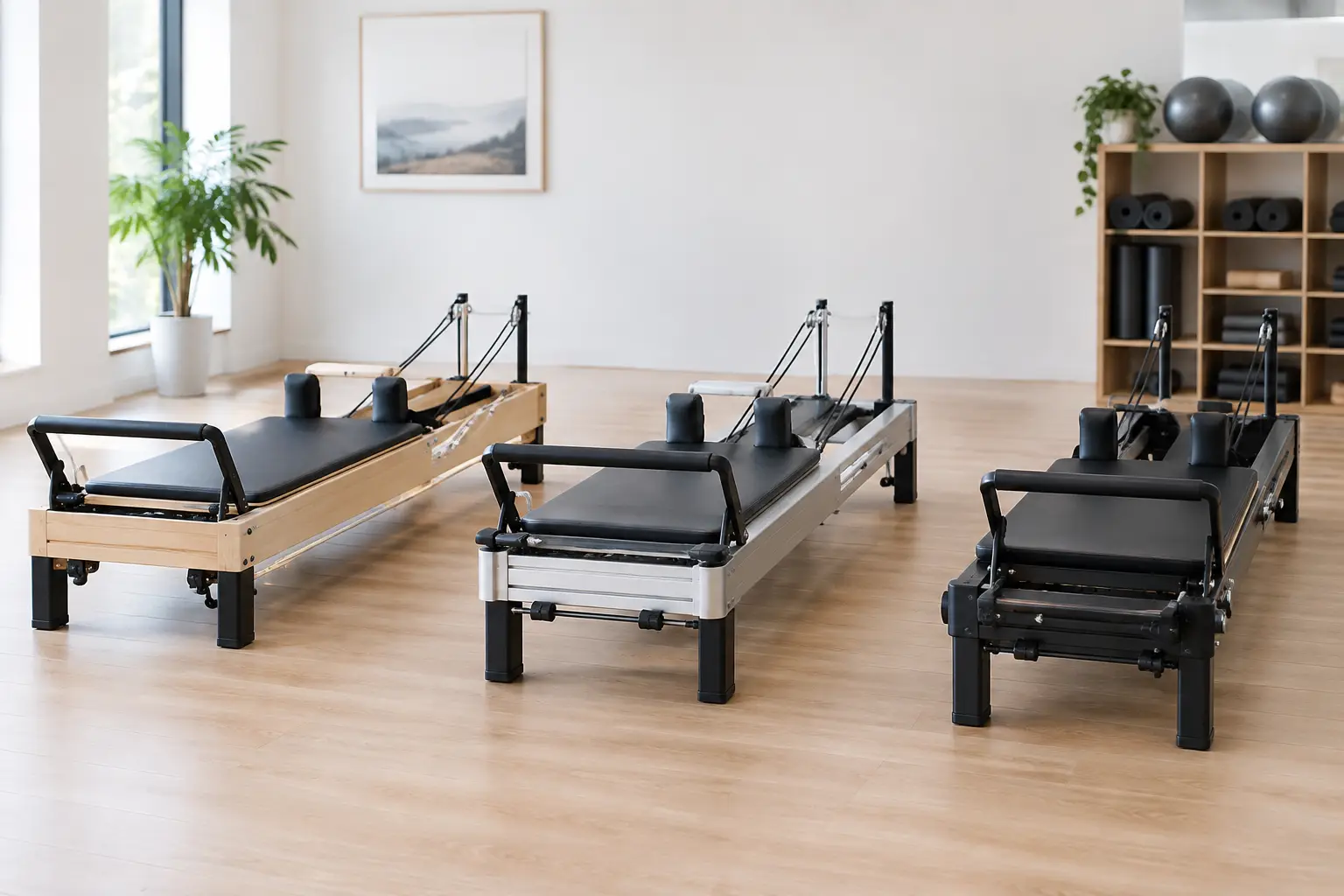
Merrithew reformers are available in different frame formats, including more portable, metal-frame home options and substantial studio-oriented models. In general, the brand is known for clean engineering, adjustable components, and a practical finish that suits multi-use spaces. If you want equipment that looks polished without becoming the visual center of a room, this may be appealing.
Peak Pilates offers both wood and metal-frame equipment depending on the line. Wood reformers can feel warmer and more furniture-like in a dedicated home studio, while metal-frame designs may better suit buyers who prioritize a contemporary look or need a more manageable footprint. Visual preference is not superficial here. A reformer that feels at home in your space is more likely to remain accessible rather than being relocated to a room you rarely use.
Carriage ride is another personal factor. Small differences in wheel systems, upholstery, rail construction, and frame geometry can change how a reformer feels in motion. One person may prefer a very smooth, quiet glide; another may like a carriage with a more grounded, substantial response. If possible, try the specific model you are considering rather than relying on a general impression of the brand.
Springs, ropes, and adjustability
Both companies use spring resistance systems that allow exercises to be scaled for different bodies and skill levels. But spring colors, tensions, attachment points, and rope or strap arrangements are not identical across brands or even within a brand’s lineup. This matters when you follow video classes, particularly if an instructor cues a spring color without explaining the intended resistance.
Merrithew equipment often gives users clear adjustment pathways and broad compatibility with brand-specific accessories. That can be useful for people who expect their practice to evolve from basic footwork and mobility sessions into more varied strength, balance, and athletic programming.
Peak’s setup can be especially appealing for practitioners who want a traditional reformer layout and plan to study classical repertoire. Still, do not assume a classical-style machine is less adaptable. Many models offer meaningful adjustability. Review the actual number of springs, gear positions, footbar settings, headrest positions, and strap options before deciding.
For either brand, pay close attention to your height and proportions. A taller user may need more carriage travel or a longer frame. A shorter user may care more about shoulder rest position, reach to the straps, and whether the footbar can be set comfortably. These are practical comfort questions, not minor details.
Space and storage can decide the purchase
A dedicated workout room gives you far more freedom, but many home buyers are choosing between a bedroom corner, living room wall, or multipurpose office. In that situation, measure more than the reformer’s listed length and width. You need usable clearance around it for getting on and off, extending the legs, moving the arms with straps, and adjusting springs without feeling cramped.
Merrithew has options that may work well for buyers who need portability, vertical storage, or a lower-profile home setup. Peak also offers models with home-friendly designs, though storage methods and folded dimensions vary substantially. Never assume that a reformer marketed for home use will be easy to move alone. Weight, balance, wheel placement, and stair access all affect real-world setup.
Also consider ceiling height if you expect to add a vertical frame, tower, or other raised attachment. A reformer can be the first purchase in a broader apparatus plan, but only if your room can safely accommodate it.
Price is only one part of long-term value
At comparable quality levels, Merrithew and Peak Pilates reformers can both represent significant investments. Prices shift by model, upholstery, frame material, included box or platform extender, delivery requirements, and optional upgrades. Comparing a base reformer with a fully accessorized package can create a misleading price gap.
Instead, make a simple ownership comparison. Identify what comes in the box, what you will need immediately, and what you may want within the next two years. A sitting box, jumpboard, platform extender, tower conversion, or replacement straps can meaningfully change the final cost.
Merrithew may offer strong value for buyers who want a broad ecosystem and easy access to contemporary programming. Peak may offer strong value for buyers who prioritize a particular classical feel, wood-frame design, or alignment with a classical instructor’s recommendations. Neither value case is automatic. The right answer depends on what you will use, not what you might use someday.
Delivery, maintenance, and support
A reformer purchase should include a plan for delivery day. Confirm whether the equipment arrives assembled, partially assembled, or boxed; whether threshold delivery is included; and whether you need help carrying it upstairs. This is especially important with heavier studio-grade equipment.
Both brands have established presences in the Pilates market, but local dealer availability, warranty terms, replacement-part access, and service support can differ by location and model. Before purchasing, ask how routine maintenance works and where you would obtain replacement springs, wheels, ropes, straps, or upholstery if needed. A reformer is a long-term piece of equipment, and dependable support becomes more valuable after the initial excitement of delivery has passed.
Which brand is the better match?
Choose Merrithew if you want a contemporary Pilates ecosystem, a wide range of home-to-studio equipment choices, and flexibility to add accessories as your practice grows. It can be a particularly practical direction for households following contemporary online classes or working with instructors who regularly teach on Merrithew equipment.
Choose Peak Pilates if a classical Pilates orientation, traditional apparatus character, or a wood-forward studio aesthetic speaks to you. It may also be the stronger choice when your instructor recommends a specific Peak configuration based on the repertoire you plan to learn.
Before placing an order, write down your room dimensions, user heights, preferred class style, accessory priorities, and all-in budget. That short exercise turns a broad Merrithew Peak comparison into a decision grounded in your actual home and practice. The best reformer is the one that makes it easier to return to Pilates tomorrow, not merely the one that looks most impressive on purchase day.