A workout can leave your muscles shaking without pounding on your joints. That is the distinction many people are looking for when they ask, is Pilates low impact? In most forms, yes: Pilates is generally considered low impact because it avoids the repetitive jumping, running, and forceful landings that create higher impact through the joints. But low impact does not automatically mean easy, gentle, or right for every body without adjustment.
Pilates can be a practical choice for building strength, improving mobility, and creating a more sustainable home fitness routine. The key is understanding what creates impact, where Pilates can still be demanding, and how to choose movements and equipment that suit your current needs.
Is Pilates Low Impact for Most People?
Pilates is low impact because one foot, both feet, or another part of the body is usually supported by the floor, mat, reformer carriage, or other apparatus. Exercises tend to be controlled rather than explosive. You are not repeatedly absorbing the force of a landing in the way you might during jogging, jump training, or many cardio classes.
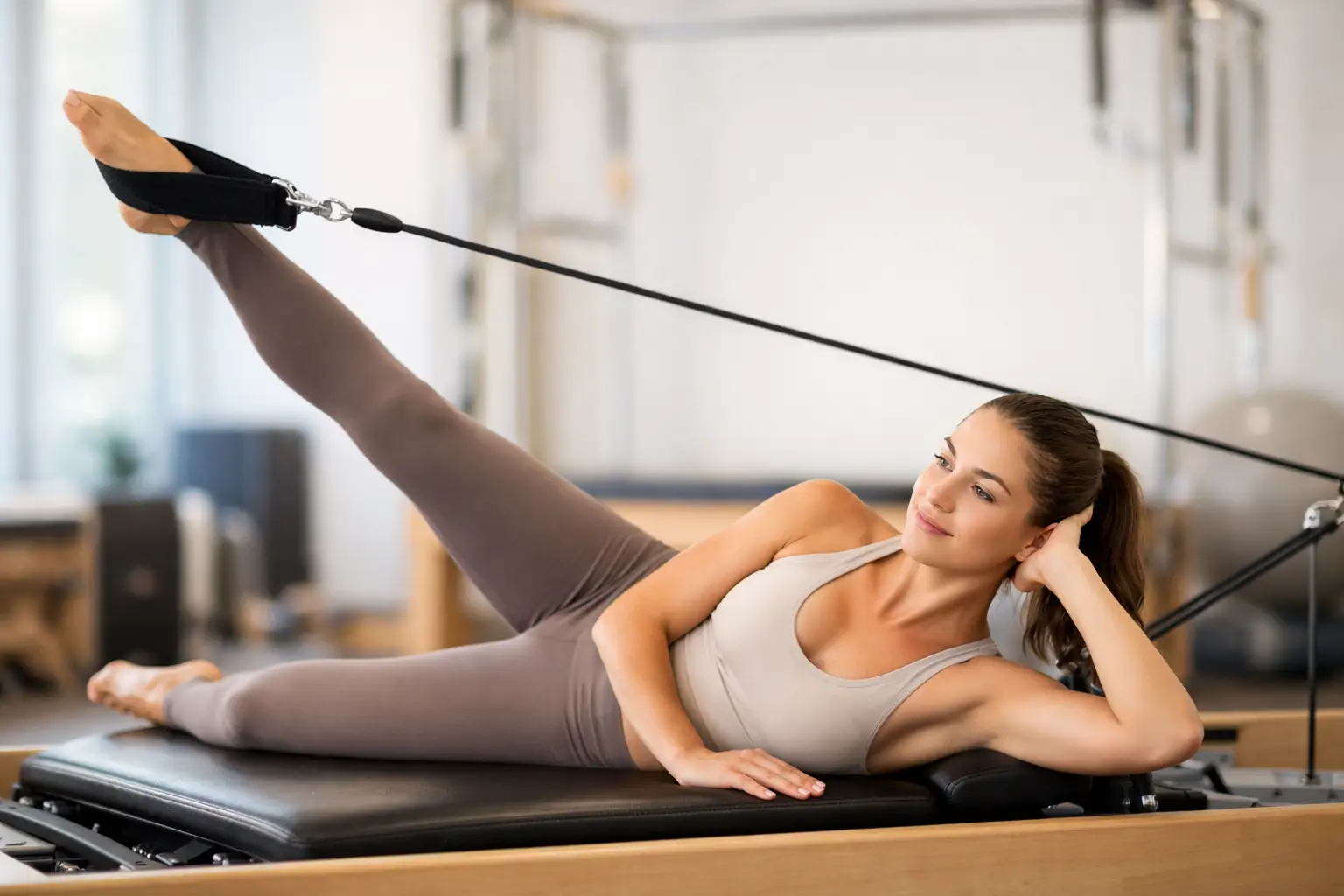
On a mat, much of the work happens lying down, seated, kneeling, or on hands and knees. That can reduce load through the hips, knees, ankles, and spine while still asking the deep abdominal muscles, glutes, back, and shoulders to work. On a reformer, the moving carriage and spring resistance provide support as well as challenge. The springs can make an exercise feel lighter or more demanding depending on the setup and movement.
This lower-impact structure is one reason Pilates appeals to beginners, adults returning to exercise, and people who want strength work that feels more joint-conscious than high-impact training. It can also complement activities such as walking, running, cycling, or strength training by developing control, range of motion, and body awareness.
Still, the phrase low impact refers to how force travels through the body. It does not describe the workout’s difficulty. A slow series of leg circles, planks, bridges, or reformer lunges may create substantial muscular fatigue even though no one is jumping.
Low Impact Does Not Mean Low Intensity
Pilates often feels deceptively challenging because it relies on time under tension, precise alignment, and controlled transitions. Rather than using momentum to complete a repetition, you may be asked to stabilize the pelvis, keep the ribs organized, and move one limb without letting the rest of the body shift. Those details require strength.
A well-designed Pilates class can raise your heart rate, especially when it uses continuous sequences or full-body reformer work. Yet the intensity is usually generated through resistance, leverage, repetition, and coordination instead of impact. For many home exercisers, that is a valuable trade-off: they can work hard without feeling as though every session requires a long recovery period.
Intensity can also be adjusted more easily than in many fast-paced workouts. On the reformer, spring tension, carriage range, footbar position, and exercise selection all change the demand. On the mat, a bent-knee version, smaller range of motion, added support, or a slower pace can make a movement more manageable. Progress does not have to mean choosing the hardest variation immediately.
What makes a Pilates session more demanding?
The same low-impact workout can become significantly harder when resistance increases, the base of support gets smaller, or the sequence requires more balance. A standing reformer exercise, for example, may be low impact but still require strong hip stability and careful control. Long-lever abdominal work can challenge the lower back if the core is not ready to maintain position.
This is why quality instruction matters. The most effective session is not necessarily the one that leaves you most exhausted. It is one that provides enough challenge to build capacity while allowing you to keep purposeful form.
How Mat and Reformer Pilates Compare
Both mat and reformer Pilates can be low impact, but they create a different experience in the body.
Mat Pilates uses body weight and gravity. It is accessible, requires little space, and can be surprisingly strenuous. However, because there is no moving carriage or spring assistance, some exercises may feel demanding for beginners, particularly those involving the neck, wrists, hip flexors, or transitions from the floor. Thoughtful modifications are part of good mat practice, not a sign that you are behind.
Reformer Pilates adds adjustable resistance and feedback from the carriage. Springs can support movement during footwork, assisted squats, or arm work, while also providing resistance for strength-focused exercises. The horizontal carriage can be especially comfortable for people who prefer to work without prolonged standing or joint pounding.
That does not make every reformer automatically suitable for every person. A light, unstable home reformer can feel less secure during standing work, and a carriage that is too short for your height can limit comfortable range of motion. Frame stability, smooth carriage travel, spring options, and adjustability influence not only the feel of a workout but also whether you can progress with confidence.
For a home setup, consider your primary goal before assuming more resistance is always better. If you want consistent mobility, foundational strength, and low-impact movement, a stable reformer with useful beginner-to-intermediate spring options may offer more long-term value than a machine designed mainly around advanced variations. Better information leads to better Pilates choices, especially when equipment is part of the decision.
When Pilates May Need Modification
Low impact is not the same as zero stress. Pilates includes loaded flexion, extension, rotation, balance work, kneeling positions, and weight-bearing through the hands. Any of these can be uncomfortable or inappropriate depending on an injury, surgery history, medical condition, or current symptoms.
For example, wrist-sensitive practitioners may need to reduce time in quadruped or plank-based work. Knee discomfort may call for extra padding, altered kneeling positions, or a different range of motion. Someone with neck tension may need to keep their head down during abdominal exercises rather than forcing a curled-up position. If you have osteoporosis, pelvic floor concerns, persistent back pain, joint instability, or are recovering from an injury or procedure, individualized guidance from a qualified health professional or experienced Pilates instructor is especially useful.
Pain is not a normal requirement for progress. Muscle effort, warmth, and temporary fatigue can be expected; sharp pain, numbness, pinching, or worsening symptoms are signals to stop and reassess. A low-impact label should never override what your body is telling you.
How to Keep Pilates Joint-Friendly at Home
Start with sessions that prioritize fundamental movement patterns over advanced choreography. Learn how to breathe without bracing excessively, find a neutral and comfortable spine position, and control a basic bridge, dead bug variation, side-lying leg series, and supported plank. These movements create a useful base for more complex mat or reformer work.
Choose a pace that lets you notice compensation. If your shoulders creep toward your ears, your pelvis rocks, or you are holding your breath to finish a repetition, reduce the range or resistance. On a reformer, use the spring setting recommended for the exercise rather than assuming a lighter spring is always easier. In some movements, too little spring support can make control more difficult.
Your environment matters as well. Use a mat that provides enough cushioning without feeling unstable, leave clear space around your equipment, and wear clothing that allows you to see and feel your alignment. If you are buying a reformer, check its weight capacity, footprint, storage requirements, and included accessories before treating it as a simple fitness purchase. A machine that fits your room and daily routine is more likely to be used consistently.
Is Low-Impact Pilates Enough for Fitness?
Pilates can be a meaningful part of a complete fitness routine, particularly for core strength, muscular endurance, mobility, posture awareness, and balance. Whether it is enough on its own depends on your goals, weekly frequency, class style, and the challenge level you can safely manage.
If cardiovascular conditioning is a priority, brisk walking, cycling, swimming, or other aerobic activity may complement Pilates well. If your goal is maximum strength or bone-loading stimulus, you may eventually benefit from progressive resistance training and, where appropriate, weight-bearing activity. Pilates does not need to do every job to be worthwhile. Its value often lies in making movement feel more controlled, sustainable, and enjoyable over time.
The best starting point is a Pilates practice you can repeat next week, not a session that asks your joints to prove something. Begin with supported, well-taught movement, then let your strength and confidence guide the next adjustment.