
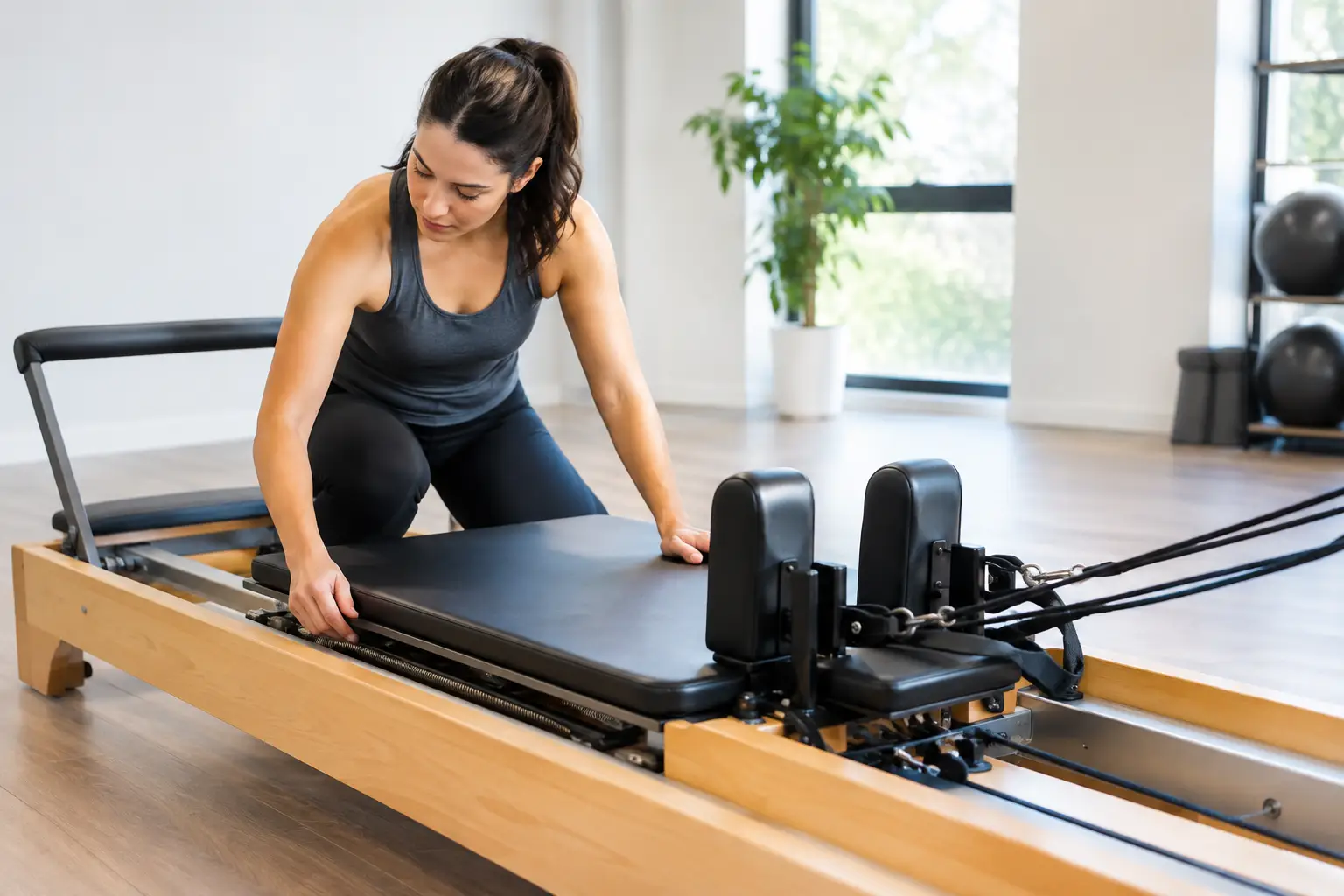
A reformer can have an attractive frame, a generous accessory package, and a price that appears reasonable, yet still feel disappointing if the carriage is poorly made. The carriage is the moving platform beneath your body, so reformer carriage quality factors directly affect how controlled, comfortable, and secure each exercise feels. For a home buyer, this is not a minor specification. It is one of the clearest indicators of whether a reformer will support consistent practice or become an expensive source of frustration.
A good carriage should move quietly and predictably, feel stable under changing body positions, and remain comfortable through longer sessions. The details that create that experience are often less visible than a frame finish or a large touchscreen, which is why they deserve a closer look before you buy.
Why the carriage deserves more attention
During footwork, the carriage carries your weight through repeated, fairly straightforward travel. During lunges, kneeling work, side splits, and supine abdominal exercises, it must do more. It needs to stay aligned as your center of gravity shifts, return smoothly against spring tension, and give you a stable surface from which to move.
A low-quality carriage can feel sticky, noisy, narrow, or slightly unstable. Those issues may not prevent a beginner from doing basic exercises, but they can make practice less enjoyable and limit confidence as you learn more demanding work. A smoother, better-supported carriage also helps you recognize the movement feedback Pilates is meant to provide: where you are controlling the springs, where you are rushing, and where your alignment changes.
Premium equipment is not automatically the right answer for every home. Still, understanding the construction behind carriage quality helps you compare reformers based on useful evidence rather than marketing language.
Reformer carriage quality factors to assess
Wheel design and track materials
The carriage travels on wheels or rollers along tracks built into the reformer frame. This system determines whether movement feels fluid or choppy. Quality wheels are typically designed to roll consistently under load and resist flattening or wearing unevenly over time. Quality tracks are straight, securely mounted, and finished in a way that reduces friction without creating a slippery or unstable feel.
When possible, test a reformer through a full range of motion. The carriage should begin moving without a jolt and should not hesitate, scrape, click, or pull to one side. Listen during both the outward press and the controlled return. Some sound is normal, particularly in a home setting with hard floors, but persistent rattling is not a feature to overlook.
Wheel maintenance matters, too. Hair, dust, and pet fur can collect near moving parts in any home gym. Before purchasing, check whether the manufacturer provides clear cleaning and adjustment guidance. A carriage that is simple to keep clean is more likely to retain its intended feel.
Frame alignment and lateral stability
A carriage may glide smoothly when you lie centered on it but reveal instability during single-leg or side-facing exercises. This is where frame alignment and carriage width matter. The platform should remain level and track straight when weight shifts slightly to one side.
A small amount of side-to-side play may be present on some designs, but excessive wobble can make standing, kneeling, and balance-focused work feel less secure. It can also be distracting for users returning to exercise after an injury or for anyone who wants a calm, confidence-building home practice.
Pay attention to the relationship between the carriage and the rails. A wider or more substantial frame may improve stability, but it also adds weight and takes up more floor space. Foldable reformers can be useful in apartments or multipurpose rooms, yet their compact design may involve compromises in rail length, carriage dimensions, or overall planted feel. The right trade-off depends on whether storage or studio-like performance is your higher priority.
Cushioning, upholstery, and platform support
Carriage padding should be supportive enough to feel comfortable on the spine, knees, shoulders, and hips without feeling overly soft. Excessively plush padding can make it harder to sense your pelvic position or maintain stability in seated work. Very thin padding may feel firm and precise, but it can be uncomfortable for longer sessions or sensitive joints.
Look for upholstery that appears securely fitted, with clean seams and no loose areas around the edges. Vinyl is common because it is easy to wipe down, but quality varies. Better upholstery generally feels smooth without being slick and is less likely to crack or separate at stress points. If you share the reformer with family members or plan to use it often, this becomes a practical durability concern.
The board beneath the padding matters as much as the surface material. A well-supported platform should not flex noticeably when you sit, kneel, or press into it. Test this carefully if the product has a stated user weight limit near your own body weight. A published limit tells you the reformer has been tested to a certain threshold; it does not fully describe how solid the carriage will feel in real use.
Carriage length and usable travel
Carriage length affects comfort, particularly for taller users, but usable travel is equally important. The distance the carriage can move before reaching the end of the rails shapes how naturally you can perform leg work, running, and larger-range movements.
Shorter carriages and shorter rails can work well for petite users or for gentle, space-conscious home practice. Taller users may feel cramped, especially if they have long legs or want to progress beyond introductory programming. Before assuming a reformer is suitable for your height, review its dimensions and consider the exercises you actually want to do.
Also check the placement of shoulder rests and the headrest. A carriage can be technically long enough while still feeling restrictive if these contact points do not suit your torso length or shoulder width. Adjustable components offer more flexibility when multiple people will use the machine.
Spring connection and return feel
The springs are not part of the carriage itself, but their connection to it strongly influences carriage performance. The attachment point should feel secure, and the carriage should return in a controlled line when springs are engaged. A jerky return can come from wheel friction, poor alignment, spring issues, or a combination of all three.
Spring systems vary by manufacturer. Some use traditional metal springs with multiple resistance options, while others use cords or different tension arrangements. Neither approach is universally better. What matters is that the resistance feels consistent and that changing springs is manageable for your hand strength, mobility, and experience level.
For beginners, clear resistance markings and a predictable return can make independent home use much easier. For experienced practitioners, a broader range of spring choices may be worth paying for. In either case, do not judge the carriage in isolation. Its quality is closely tied to how it behaves under resistance.
How to evaluate a carriage before purchasing
Product photos rarely reveal the full story, so look beyond polished images. Read specifications for carriage dimensions, rail length, reformer weight, user weight capacity, warranty coverage, and replacement-part availability. A company that clearly explains its moving components and care requirements is generally giving shoppers more useful information than one focused only on lifestyle imagery.
If you can try a reformer in person, wear socks with grip or the footwear you expect to use at home. Move the carriage slowly first, then at a normal workout pace. Test it lying down, kneeling, and sitting if the setting allows. Notice whether you feel centered and whether the carriage remains quiet and composed when your weight is uneven.
For online-only purchases, customer reviews can help, but read them with context. Comments about delivery damage are different from repeated reports of sticking wheels, unstable carriage travel, cracked upholstery, or difficulty obtaining service. Reviews from users with a similar height, body size, and intended use are often the most relevant.
Match carriage quality to your real practice
A first-time buyer who wants two or three weekly sessions may not need the same carriage specifications as a former studio client practicing daily. But buying the least expensive option can be false economy if poor glide or weak padding makes you avoid using it. On the other hand, paying for commercial-grade construction may not make sense if you need a compact reformer that can be stored after each workout.
Set your priorities before comparing models. If joint comfort is central, focus on padding, headrest adjustment, and smooth travel. If you are tall, give rail length and carriage dimensions more weight. If you expect to share the machine, favor adjustability and a design that feels stable for different body types. Better information leads to better Pilates choices, especially with equipment meant to stay in your home for years.
The best carriage is not necessarily the one with the most impressive description. It is the one that lets you move with enough comfort, control, and trust that returning to your practice feels like the easy decision.