
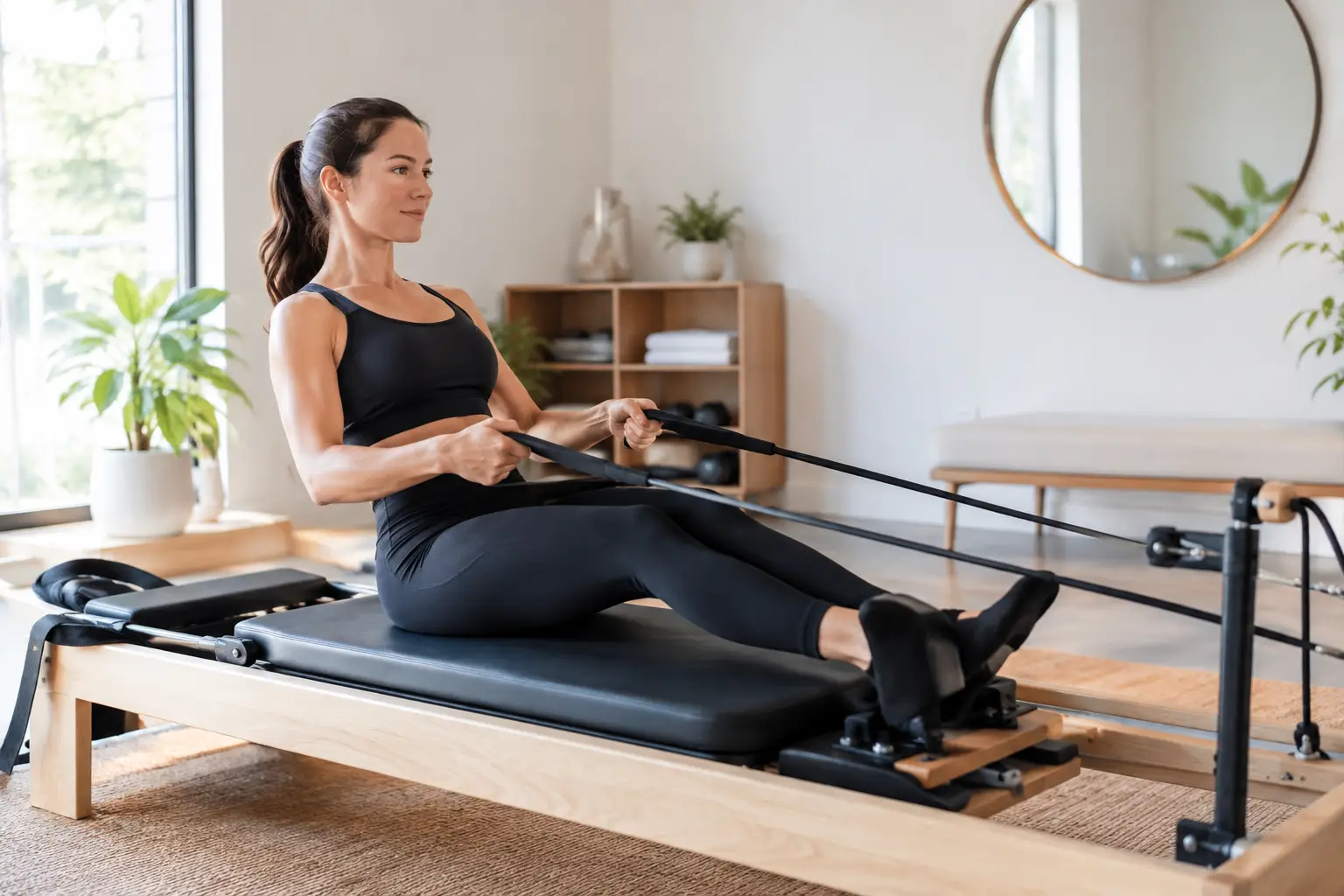
A reformer can turn a spare room, bedroom corner, or living area into a genuinely useful Pilates practice space. But reformer ownership is not automatically the right next step after enjoying a few studio classes. It is a commitment to a specific way of training: one that asks for floor space, upfront spending, basic equipment care, and enough consistency to make the purchase feel worthwhile.
For some households, that trade-off creates more freedom than a studio membership ever could. For others, a quality mat, a few small props, and occasional in-person classes may be the more realistic path. Better information leads to better Pilates choices, especially when a large piece of equipment is involved.
What Reformer Ownership Really Changes
A home reformer changes the friction around working out. You do not need to reserve a class, drive across town, or structure your practice around a studio schedule. A 20-minute session becomes possible before work, after school drop-off, or between other responsibilities. That convenience is the strongest argument for owning one.
It also changes the kind of Pilates practice you can build. The moving carriage, springs, straps, footbar, and adjustable positions make it easier to work through a wide range of exercises for lower-body strength, trunk control, mobility, balance, and upper-body endurance. For people who find mat Pilates difficult to feel or modify, the feedback and support of a reformer can be especially helpful.
Still, equipment does not create consistency on its own. A reformer that becomes a clothes rack is an expensive reminder of good intentions. The value of ownership depends less on how impressive the machine looks and more on whether it fits your actual routine.
When a Home Reformer Is Worth the Investment
Reformer ownership tends to make sense when Pilates is already a stable part of your week. If you attend reformer classes two or three times weekly, understand the basic setup, and often wish you had more flexibility in when you practice, a home machine can be a practical extension of an established habit.
It can also be a strong option for people who prefer private movement. Some exercisers learn better without the pressure of keeping pace with a class. Others have work schedules, caregiving responsibilities, or limited studio access that make regular appointments difficult. At home, Pilates can be more adaptable: a full 45-minute workout one day and a focused mobility session the next.
The financial comparison is personal, but it deserves an honest look. Studio classes in many US markets can add up quickly, particularly when purchased individually. A reformer may cost more upfront, yet its cost per use falls over time. That calculation becomes more favorable when more than one person in the household will use it, or when ownership replaces a meaningful portion of existing class spending.
The calculation is less favorable if you are still deciding whether you enjoy reformer Pilates, expect to use it only occasionally, or rely on instructors for motivation and form feedback. In those cases, renting, buying used from a reputable source, or continuing with studio classes can preserve flexibility.
Start With Space, Not the Shopping Cart
The most common home-equipment mistake is measuring only where a reformer will sit. A reformer needs clearance around it for getting on and off safely, using straps, changing springs, and moving through exercises without hitting furniture. You also need to consider whether the space remains functional when the carriage is extended.
Measure the room carefully, including ceiling height if you are considering a vertical storage model or using a jumpboard. Account for walkways, doors, pets, and the possibility that another household member may need the area at the same time. A reformer can fit on paper and still feel intrusive in daily life.
Storage is another decision point. Some compact reformers fold, stand upright, or roll away, which can be useful in apartments and multipurpose rooms. Those designs involve trade-offs. Folding mechanisms add steps before and after every workout, and lighter frames may feel less planted than heavier studio-style equipment. If you have a dedicated space and practice frequently, a reformer that stays set up is usually easier to use.
Floor protection matters as well. A stable mat can reduce vibration, protect hardwood or carpet, and keep the reformer from shifting. Avoid placing equipment on uneven flooring or in damp areas where moisture can affect metal components, upholstery, and wood finishes.
Choose the Reformer for Your Body and Practice
Price alone does not tell you whether a reformer will feel good to use. Frame construction, carriage travel, spring resistance, platform dimensions, and adjustability have a direct effect on comfort and exercise options.
A sturdier frame often provides a quieter, more stable ride, particularly for taller users or anyone who wants to progress into more demanding strength work. Check the listed weight capacity, but also look at carriage length and footbar positions. A machine can technically support your weight while still feeling too short or restrictive for your height and proportions.
Resistance systems deserve close attention. Traditional spring-based reformers provide a familiar Pilates feel and allow resistance to be adjusted exercise by exercise. Some budget models use cords or bungee-style resistance instead. These can work for light home movement, but they may not offer the same consistency, range, or long-term replacement options as quality springs.
Accessories can add useful variety, but they should not distract from the essentials. A jumpboard, sitting box, platform extender, and tower attachment may support your goals, especially if you want a broader home program. They also increase the total cost and storage demands. Buy for the practice you expect to do regularly, not the version of yourself who may someday use every attachment.
The Hidden Costs of Reformer Ownership
The listed price is only part of the budget. Delivery, assembly, taxes, protective flooring, and accessories can materially change the total. Larger reformers may arrive partly assembled, but getting one into an upstairs room or through a narrow hallway can require planning. Before ordering, measure entryways and confirm the delivery process.
Maintenance is generally manageable, but it is not optional. Wipe down upholstery and rails, keep the track free of dust and hair, inspect straps and ropes for wear, and follow the manufacturer’s guidance for spring replacement. Springs are safety components, not permanent fixtures. A well-built reformer can last for years, but only if it is used and maintained as intended.
There is also the cost of instruction. A reformer gives you options, not expertise. Beginners benefit from learning spring settings, carriage control, alignment, and safe transitions from a qualified instructor before practicing independently. Virtual classes can be useful, but they work best when you already understand how your specific reformer is configured.
Build a Routine That Protects the Purchase
The best way to make a home reformer earn its place is to give it a realistic job. Instead of promising daily hour-long workouts, plan two or three repeatable sessions each week. Keep one session short enough for busy days, such as a 15- or 20-minute fundamentals practice focused on breath, footwork, bridging, rowing, and mobility.
Place your reformer where you can see it if possible. Visibility can be more useful than elaborate motivation strategies. Keep straps organized, save a few trusted class formats, and avoid making setup complicated. The easier it is to begin, the more likely your equipment will become part of your life rather than a project you keep postponing.
It is also wise to maintain some connection to guided instruction. An occasional private session or class can help you refine form, learn new progressions, and catch habits that are difficult to notice alone. Home practice and studio guidance do not have to compete. For many people, they work best together.
A Decision You Can Feel Good About
A home reformer is most valuable when it supports a practice you already want to protect: consistent, thoughtful movement that fits your body and your schedule. Give yourself permission to choose the simpler option if your space, budget, or current experience does not support ownership yet. The right setup is the one you will use with confidence, not the one that asks the most of your home or your wallet.