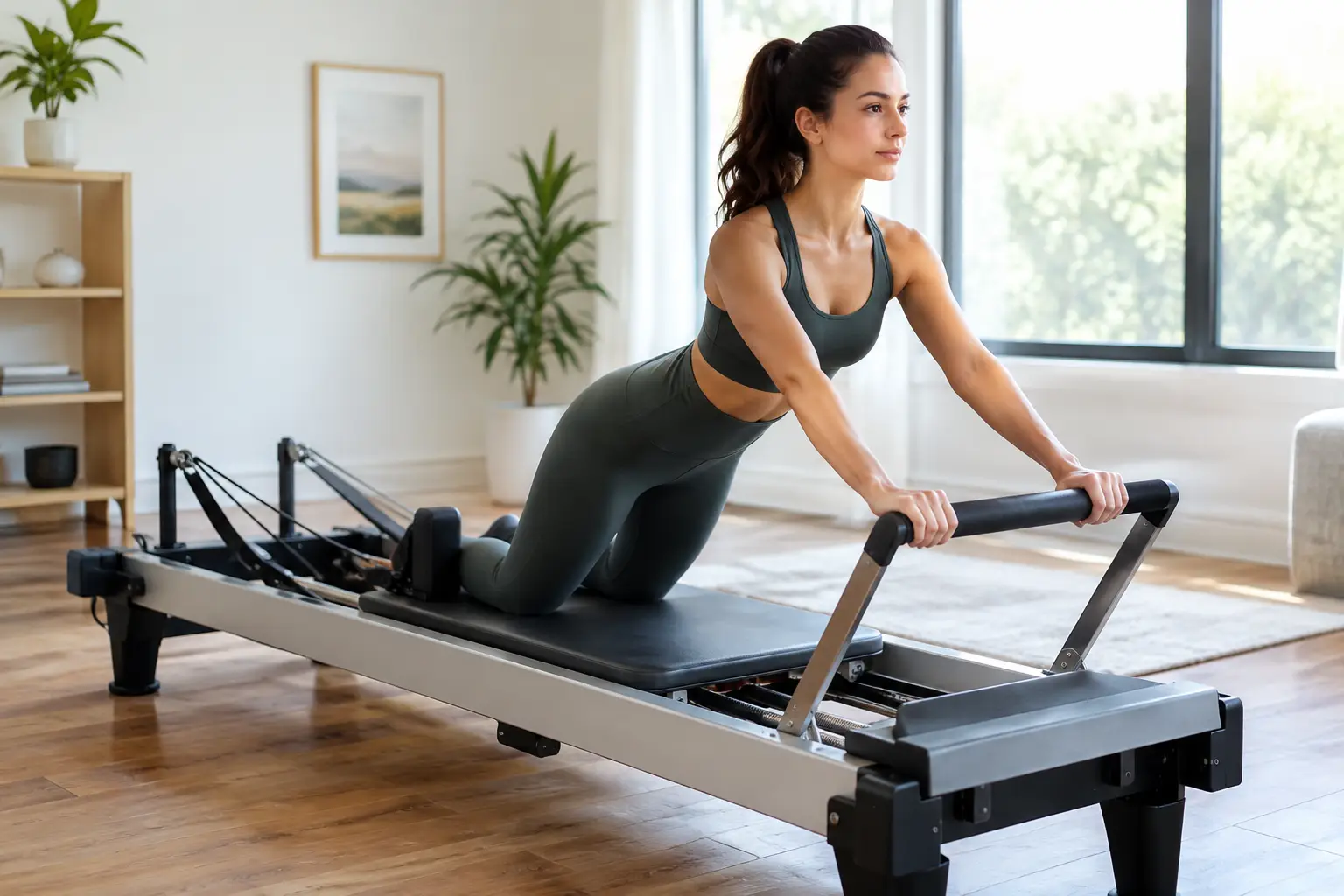
A home reformer can make Pilates more consistent, but the machine itself does not provide the plan. The best reformer workout platforms give you a clear way to learn the equipment, progress without guessing, and adapt sessions to the body you have on a given day. That matters whether you have a compact folding reformer in a spare room or a studio-style model that represents a more substantial investment.
The right membership is not necessarily the one with the largest class count. It is the one you will return to often enough to build skill, strength, and confidence. For many home users, that means reliable beginner instruction, clear equipment modifications, and workouts that fit into a real weekday.
What the best reformer workout platforms do well
A useful reformer platform treats the machine as more than a moving carriage. It explains spring choices, headrest positions, footbar setup, and transitions in language a home practitioner can follow. It also provides thoughtful programming rather than simply placing hundreds of unrelated classes in a library.
Look for instructors who cue both the exercise and its purpose. A cue such as “keep the ribs from lifting as the carriage returns” gives you something practical to feel and adjust. Fast-paced classes can be enjoyable, but a beginner generally benefits more from precise demonstrations and a pace that leaves room to change springs safely.
Equipment compatibility is another deciding factor. Most online reformer workouts assume a traditional studio-style machine with a footbar, straps, and a box. A portable reformer may have a different carriage length, lighter springs, fewer rope settings, or no standing platform. Before subscribing, review a few sample class descriptions and confirm that the platform offers options appropriate for your setup.
7 reformer workout platforms worth considering
These platforms serve different training preferences. Class libraries, instructor rosters, app functions, and membership terms can change, so it is wise to review current trial options and the reformer catalog before committing to an annual plan.
1. Pilates Anytime
Pilates Anytime is a strong all-around choice for people who want variety without moving away from Pilates fundamentals. Its reformer library includes beginner sessions, classical work, contemporary programming, athletic classes, and targeted sessions for concerns such as mobility or posture.
The main advantage is depth. Once you understand your reformer, you can stay with the same platform as your interests change. The trade-off is that a large library can feel less structured than a dedicated beginner course. New users may get better results by choosing one instructor or a focused series instead of browsing randomly.
2. Pilatesology
Pilatesology is especially well suited to readers drawn to classical Pilates and detailed instruction. Its teaching tends to emphasize the traditional repertoire, purposeful sequencing, and the relationship between exercises rather than treating the reformer as general gym equipment.
This can be a valuable fit for someone who wants to understand why footwork, short box work, and long stretch belong in a broader method. It may feel less appealing if your priority is high-energy, music-led workouts or frequent short-form classes. For the right learner, however, its method-based approach can build a durable technical foundation.
3. John Garey TV
John Garey TV offers a practical blend of Pilates instruction, conditioning, and approachable class formats. The platform is worth considering if you want reformer training that feels organized but not overly formal, with options that can support both newer and more experienced users.
Its appeal is range within a clearly fitness-oriented format. You may find Pilates, strength-focused sessions, and movement education in one place. That variety is useful for a home routine, though it also means you should filter carefully if your goal is exclusively traditional reformer Pilates.
4. Dynamic Pilates TV
Dynamic Pilates TV can suit home practitioners who enjoy contemporary Pilates with a more active, flowing feel. The platform includes a mix of reformer and other movement classes, allowing you to use your reformer on some days and choose mat or mobility work when time or energy is limited.
This flexibility supports consistency, particularly for people who do not want every workout to require a full equipment setup. The consideration is that contemporary programming can vary widely in style. If you are brand-new to Pilates, start with its introductory offerings before taking faster full-body classes.
5. Pilates by Lisa
Pilates by Lisa is a compelling option for users who value polished, low-impact workouts that can become part of a steady wellness routine. Its programming commonly appeals to people looking for strength, posture support, mobility, and a calmer training experience rather than an intense boot-camp atmosphere.
For a home reformer owner, the benefit is a lifestyle-friendly approach that makes frequent practice feel achievable. Be sure to check the current reformer class selection against your needs, especially if you want advanced repertoire, highly technical classical instruction, or equipment-specific progressions.
6. Merrithew Connect
Merrithew Connect deserves attention for owners of Merrithew or STOTT Pilates equipment, as its educational perspective is closely connected to recognized Pilates training and apparatus design. This can be reassuring when you want instruction that accounts for equipment setup and professional movement principles.
It may be particularly useful when you are learning a new piece of apparatus or want classes that feel closer to a studio education environment. As with any brand-connected platform, confirm that the workout style and instructor personality work for you. Equipment expertise is valuable, but it still needs to translate into a routine you enjoy.
7. Fluidform at Home
Fluidform at Home is worth exploring for people who prefer premium, carefully produced reformer sessions with a strong emphasis on controlled movement and studio-style guidance. Its visual presentation and class structure can make at-home practice feel more intentional, which is helpful when motivation is tied to the experience of a well-run studio class.
The practical question is whether its equipment assumptions match your reformer. Some home machines do not have the same accessories, dimensions, or resistance feel as the equipment used in filmed sessions. Review the required props and reformer recommendations before making it your primary platform.
How to choose a platform for your home setup
Begin with your actual starting point, not your aspirational one. If you have never used springs or straps before, choose a platform with a defined beginner path and classes that demonstrate setup slowly. A beginner who follows a well-taught 20-minute session three times a week will usually gain more than one who saves advanced workouts and feels intimidated to begin.
If you already take reformer classes in a studio, your priorities may be different. You may want more challenging programming, familiar instructors, or a broad library to supplement your in-person schedule. In that case, a platform with strong filtering by duration, level, body focus, and equipment can be more useful than a step-by-step course.
Your reformer also changes the answer. A lightweight, foldable model can be an excellent home solution, but it may not be appropriate for jumping, kneeling sequences, or exercises that rely on a standing platform. Choose instructors who mention alternatives rather than assuming every viewer owns a commercial-grade machine.
It is also reasonable to consider your budget beyond the monthly membership. A platform that asks for a box, jumpboard, platform extender, hand weights, and multiple bands may offer excellent programming, yet create extra costs and storage demands. There is nothing less committed about using the reformer and accessories you already own well.
Make the subscription work before buying more equipment
Use a trial period as a practical test, not just a chance to sample the most demanding class. Take one beginner or fundamentals workout, one full-body session, and one class that uses the accessories you expect to use regularly. Notice whether you can follow spring changes, whether the instructor’s pacing feels safe, and whether the camera angles let you understand the details.
Then create a simple two-week plan. You might schedule two reformer sessions and one shorter mobility or mat class each week. This gives you enough repetition to assess the platform fairly without treating Pilates as another all-or-nothing commitment.
A good platform should make you more capable with your reformer over time, not more dependent on chasing the next workout. Choose the one that helps you move with better awareness, use your equipment confidently, and keep a practice that fits your home and your life.
Leave a Reply
You must be logged in to post a comment.