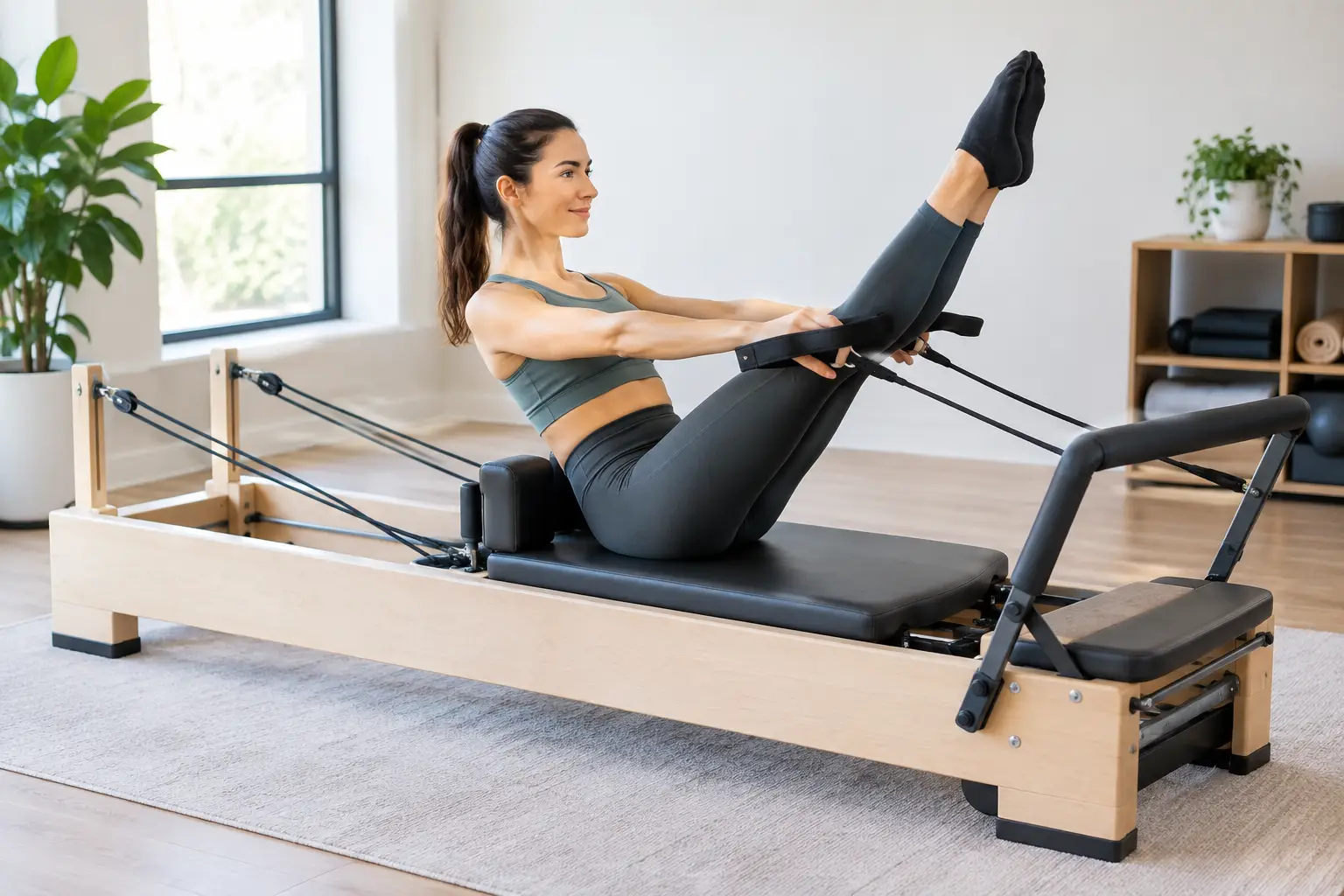
A reformer can look beautiful in a home gym and still be the wrong purchase if it feels limiting, takes over the room, or does not support the way you actually plan to practice. This BASI reformer review focuses on the details that matter after the initial excitement wears off: movement quality, adjustability, home practicality, and the value of a premium studio-style machine.
BASI Reformer Review: The Short Version
BASI Systems positions its reformers at the premium end of the Pilates equipment market. The appeal is not simply a polished appearance. These machines are designed around a studio-informed training experience, with careful attention to carriage travel, spring resistance, pulley adjustments, and the range of exercises a dedicated practitioner may want to perform over time.
For the right buyer, a BASI reformer can be a long-term centerpiece for home Pilates. It is especially compelling for someone who has taken instructor-led reformer classes, values precise movement feedback, and expects to practice consistently for years. It is less compelling for a casual beginner who wants an occasional workout, needs frequent fold-away storage, or has not yet decided whether reformer Pilates will become a regular habit.
The central trade-off is straightforward: you are paying for a more refined, studio-oriented piece of equipment, not just a moving carriage with springs. That can be worthwhile, but only if its capabilities fit your body, goals, space, and budget.
What the BASI Approach Brings to a Home Practice
BASI is closely associated with comprehensive Pilates education, and that background shows in the way its equipment is intended to support progression. A quality reformer should not force you into a small selection of familiar footwork and core exercises. It should give you room to modify, advance, and work through different body positions with confidence.
The BASI experience is geared toward that broader practice. The resistance system allows users to scale exercises from gentle mobility work to more demanding strength and control work. Adjustable ropes and pulleys matter here. They influence the line of pull during arm work, side-lying exercises, seated movements, and more advanced repertoire. Small setup changes can make an exercise more appropriate for your proportions, shoulder comfort, and current skill level.
This is one reason premium reformers can feel different from entry-level home models. The benefit is not that every exercise becomes harder. It is that the machine gives a skilled instructor or a thoughtful home user more ways to make movements fit the person doing them.
Carriage Feel, Frame Quality, and Daily Use
A reformer’s carriage is where the purchase becomes very personal. A smooth, stable glide helps you focus on alignment and control rather than compensating for a choppy track or an unstable platform. BASI reformers are generally regarded as studio-grade equipment, with a controlled carriage feel that supports slow, deliberate Pilates work as well as more dynamic sequences.
That stability can be particularly valuable for people rebuilding strength, working on balance, or learning how to organize their hips, ribs, and shoulders during movement. A carriage that moves predictably gives clearer feedback. If you push unevenly through your feet or pull more with one arm, you are more likely to notice it.
The overall construction also signals that this is not intended to be disposable fitness equipment. Premium materials and a substantial frame can make a reformer feel more secure during regular use, but they also make it heavier and less convenient to relocate. Before buying, measure not only the machine’s footprint but also the open area needed to get on and off the carriage, extend your legs, use straps, and move around the sides safely.
For apartment dwellers and multipurpose rooms, this is a meaningful consideration. A reformer may technically fit against a wall, yet still be frustrating to use if you must shift furniture before every session.
Accessories and Exercise Range Need a Careful Look
The base reformer is only part of the decision. Your available exercise range depends on the exact configuration and accessories included with the purchase. A box, platform extender, jump board, handles, and other components can change how you train, but they can also add cost and storage demands.
Do not assume that a premium reformer automatically includes every accessory you have used in a studio. Ask for an itemized list before comparing prices. It is also worth considering which accessories you will use in the first six months, rather than buying every available add-on at once.
A box is useful for seated work, prone back extension, short box abdominal exercises, and many mobility variations. A jump board may appeal to someone who enjoys a more athletic, low-impact workout. Neither is essential for a beginner learning basic carriage control, footwork, bridging, and strap work.
If you work with a Pilates instructor virtually, ask what equipment they expect you to have. This can prevent a mismatch between the programming you want and the setup you buy.
Is the BASI Reformer Practical for Beginners?
A beginner can absolutely use a BASI reformer, but the machine itself does not replace instruction. Premium equipment has a longer learning curve because it offers more options. You need to understand spring changes, stopper settings, rope length, and safe transitions before you begin experimenting with advanced exercises.
That said, a well-made reformer can be a supportive place to learn. Its stability and adjustability may make foundational work more comfortable than trying to force your body into a one-size-fits-all setup. Beginners with a history of back pain, shoulder sensitivity, joint instability, or recent medical concerns should get individualized guidance from a qualified professional rather than relying on generic workout videos.
For an at-home beginner, the most realistic plan is often two or three focused sessions per week, each built around fundamentals. Consistency matters more than trying to replicate a full studio class from day one.
Price and Long-Term Value
BASI reformers sit in a premium price category, so the value question should be tied to expected use. If you currently attend several reformer classes each week and want the freedom to practice at home, the investment may make practical sense over time. It can also be valuable for experienced practitioners who want to maintain a consistent routine between studio sessions.
If your interest is still exploratory, however, a lower-cost reformer, equipment rental, or mat Pilates program may be the more sensible starting point. There is no advantage in owning an advanced machine that becomes an expensive clothes rack.
Also account for costs beyond the listed price: delivery, assembly, accessory packages, floor protection, maintenance, and the possible difficulty of moving the machine later. A heavier studio-style reformer may hold its appeal for years, but it asks for a more permanent relationship with your space.
Who Is Most Likely to Be Happy With It?
A BASI reformer is best suited to a committed home practitioner who wants a studio-caliber feel and plans to develop beyond introductory routines. It can be a strong match for a former studio member, a Pilates teacher building a small home teaching space, or a household where more than one person will use the machine.
It may be less suitable for someone whose top priorities are a low upfront cost, compact storage, or quick cardio-style workouts. There are more economical ways to begin Pilates, and a premium reformer is not necessary to gain better core strength, mobility, posture awareness, and body control.
The most useful comparison is not simply BASI versus another brand. Compare the BASI setup you are considering with the type of practice you want to sustain. Consider the space it will occupy, the accessories you truly need, whether you can access reliable instruction, and how often you expect to use it after the first month.
Questions to Ask Before You Buy
Will it fit the room in use, not just on paper?
Use painter’s tape to mark the reformer’s approximate footprint and allow extra clearance around it. Practice walking through the room, opening doors, and imagining a full arm-and-leg extension. This simple step can reveal whether a dedicated workout area is realistic.
Which configuration are you actually purchasing?
Confirm the current dimensions, weight, spring setup, included accessories, warranty terms, delivery process, and assembly requirements with the seller. Product packages can change, and details may differ by model or retailer.
Can you use it well enough to justify it?
A few supervised sessions, a virtual private lesson, or a trial on a similar studio reformer can provide more useful information than another hour of product research. Notice whether you enjoy the pace and precision of reformer work enough to make it part of your week.
A BASI reformer is a considered purchase, not a shortcut to a Pilates routine. If the machine fits your space and the way you want to move, it can make regular practice easier to return to, which is where its real value begins.
Leave a Reply
You must be logged in to post a comment.