
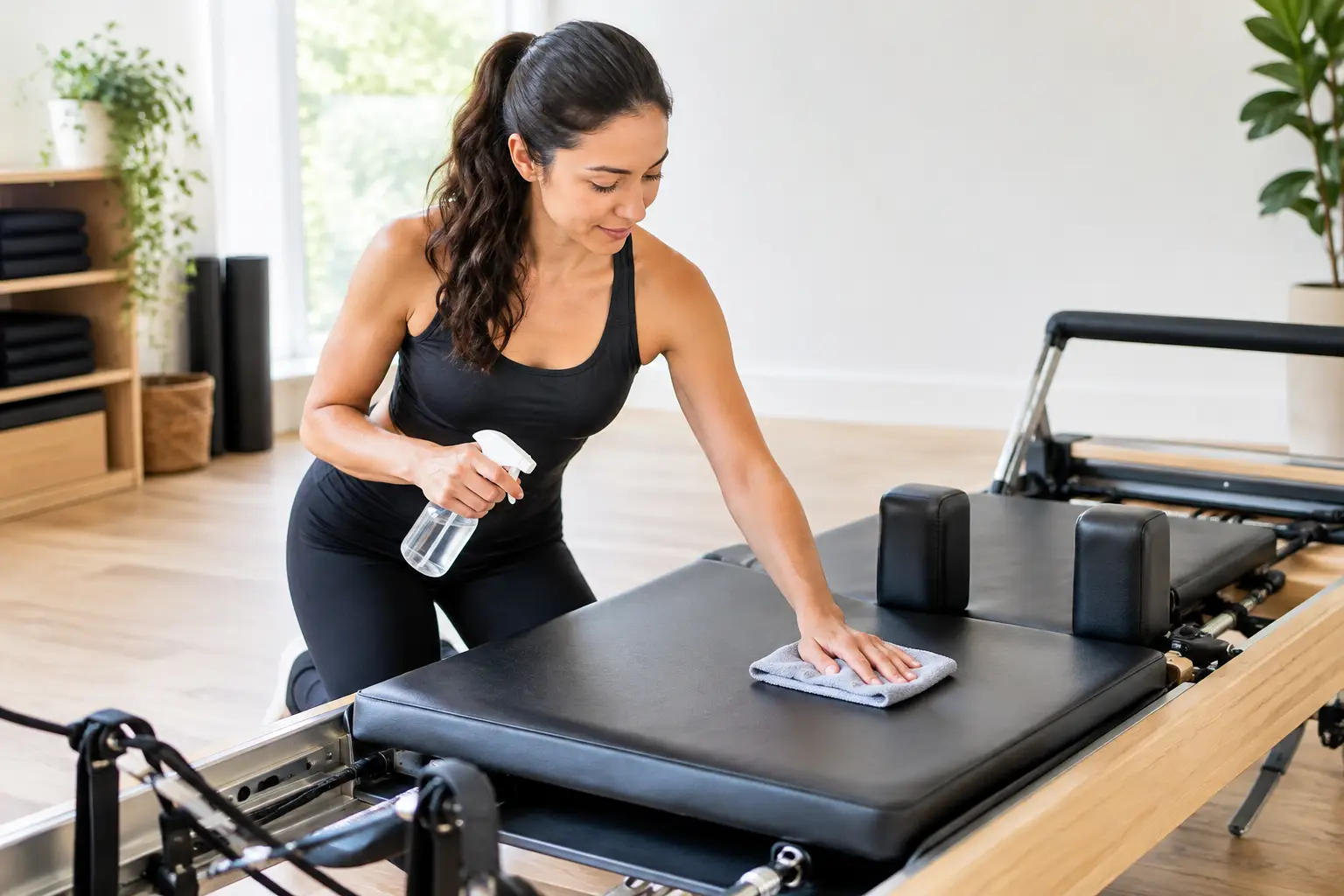
A reformer can look clean while still collecting the things that affect its comfort and lifespan: skin oils on the carriage, sweat on the footbar, dust in the rails, and residue on straps and handles. Knowing how to clean Pilates reformer equipment properly is less about aggressive disinfecting and more about using the right amount of care on materials that move, bear weight, and wear over time.
For a home reformer, a short wipe-down after each use is usually more effective than an occasional deep-cleaning session. The goal is to keep touchpoints hygienic, preserve the upholstery and moving parts, and spot small maintenance issues before they become expensive repairs.
Start With Your Reformer’s Materials and Manual
Reformers are not built from one universal set of materials. A wood-frame model may have maple or beech components with a clear finish, while a metal-frame reformer may use powder-coated steel or aluminum. Carriages are commonly upholstered in vinyl, but the exact finish and cleaning tolerance can vary. Straps may be cotton, nylon, or another synthetic webbing, and the wheels, rails, springs, and pulleys need a different approach than the surfaces you touch during class.
Before using a new cleaner, check the owner’s manual or the manufacturer’s care instructions. This matters most for upholstery, wood finishes, and straps. Some brands approve a mild soap-and-water solution, while others specify a particular disinfectant type or warn against alcohol, bleach, essential oils, or abrasive products.
If you no longer have the manual, take the conservative route. Use a soft microfiber cloth that is lightly dampened rather than wet, and avoid spraying cleaning products directly onto any part of the reformer.
What to Keep Near Your Reformer
A simple cleaning setup makes the habit easier to maintain. Keep a few clean microfiber cloths nearby, along with a small spray bottle containing the cleaner approved for your equipment. A soft, dry brush or handheld vacuum attachment is useful for removing dust around the carriage tracks and under the frame.
For many home users, the safest everyday option is a cloth dampened with warm water and a small amount of mild dish soap. The cloth should feel barely wet when you wipe the machine. Follow with a second cloth dampened only with water if needed, then dry the surface thoroughly.
Disinfectants are useful when more than one person uses the reformer, after illness, or for high-touch areas such as the footbar and handles. However, disinfecting every surface after every session can be unnecessarily harsh, especially on vinyl and coated finishes. Use only products your manufacturer permits, and allow the required contact time before wiping them away.
Your After-Use Cleaning Routine
The most practical routine takes about two minutes. Begin with the areas that come into direct contact with your hands, feet, face, or skin: the carriage upholstery, headrest, shoulder rests, footbar, platform, handles, and straps.
Wipe the carriage and headrest with your approved cleaner on a microfiber cloth. Do not saturate seams, stitching, or the edges where upholstery wraps around a board. Excess moisture can work its way beneath vinyl, which may weaken adhesives or encourage mildew in humid spaces.
Move to the shoulder rests and footbar next. These areas tend to hold sweat and body lotion, particularly if you practice barefoot or in warm conditions. A gentle wipe is generally enough, followed by drying with a clean cloth.
Clean the handles and loops carefully, but do not soak them. If your straps are fabric, wipe only as directed by the manufacturer. Repeated saturation can leave water marks, change the feel of the material, or affect stitching. Let straps hang straight and dry fully before folding or storing the machine.
Finally, look over the reformer before you walk away. If you notice moisture near the rails, wheels, springs, or pulleys, dry it immediately. These components are designed for motion, not for sitting in cleaning solution or sweat.
How to Deep Clean a Pilates Reformer
A more thorough cleaning every two to four weeks works well for a reformer used several times each week. If your reformer is used by multiple family members, sits near an open window, or lives in a garage or multipurpose room, you may need to clean dust and debris more often.
Clean the Frame, Platform, and Upholstery
Start by removing accessories such as a jumpboard, box, pole, or mat conversion piece. Wipe each item separately, including the underside and attachment points where dust tends to collect.
Use a soft cloth on the frame, moving with the grain on wood components. Avoid household furniture polish, oil-based sprays, or wax unless the manufacturer specifically recommends them. These products can leave a slick residue, attract dust, and make a wood reformer harder to grip safely when moving it.
For vinyl upholstery, focus on removing body oils before they build up. Harsh cleaners may make vinyl appear clean in the short term but can eventually cause fading, stiffness, or cracking. Never use a rough sponge, scrub brush, or powdered cleanser on the carriage or pads.
Remove Dust From the Rails and Wheels
Dust on the rails is one of the most common causes of a carriage that feels less smooth than usual. With the reformer unoccupied and springs disconnected only if your manual allows it, use a dry microfiber cloth to wipe the rails. A soft brush can help lift lint from corners and under the carriage.
Do not apply lubricant to rails, wheels, or springs unless your manufacturer explicitly instructs you to do so. Many modern reformers are designed to run dry, and the wrong lubricant can collect debris or interfere with normal movement. If the carriage squeaks, catches, or rolls unevenly after cleaning, treat that as a maintenance question rather than a reason to experiment with household oil.
Check Straps, Springs, and Hardware While You Clean
Deep cleaning is also a useful inspection point. Run your fingers along the straps and loops, looking for fraying, thinning, stiff sections, or damaged stitching. Check that clips close securely and that ropes or straps are even in length.
Look at springs for gaps, rust, distorted coils, or hooks that do not sit correctly. Inspect visible bolts, shoulder blocks, and the footbar for looseness. Cleaning does not replace professional service, but it gives you a regular opportunity to notice when something needs attention. Stop using the reformer if a structural or resistance component appears damaged.
Cleaning Mistakes That Can Shorten a Reformer’s Life
The biggest mistake is over-wetting the machine. Spraying the carriage, rails, or straps directly may send liquid into seams, wheel assemblies, wood joints, and hardware. Put cleaner on the cloth first, then wipe.
Another common issue is treating every cleaner as interchangeable. Bleach, ammonia, acetone, strong degreasers, and undiluted alcohol can damage upholstery and finishes. Fragranced sprays and essential-oil cleaners may also leave residue that becomes slippery or breaks down coatings over time.
It is also tempting to cover a reformer immediately after cleaning, especially in a small home. Wait until all surfaces and straps are completely dry. A cover protects equipment from dust, but it can trap moisture against upholstery and wood.
Build Cleaning Into Your Home Pilates Routine
A reformer is a long-term home fitness purchase, and its condition affects both your workout experience and its resale value. The simplest system is to keep a cloth and approved cleaner within reach, wipe high-touch surfaces after every session, and reserve a few minutes each month for rails, accessories, and a careful equipment check.
If your routine has been inconsistent, start with the surfaces you touch most and build from there. A clean, smooth-running reformer makes it easier to return to your practice with confidence – and easier to protect the investment that supports it.
Leave a Reply
You must be logged in to post a comment.