
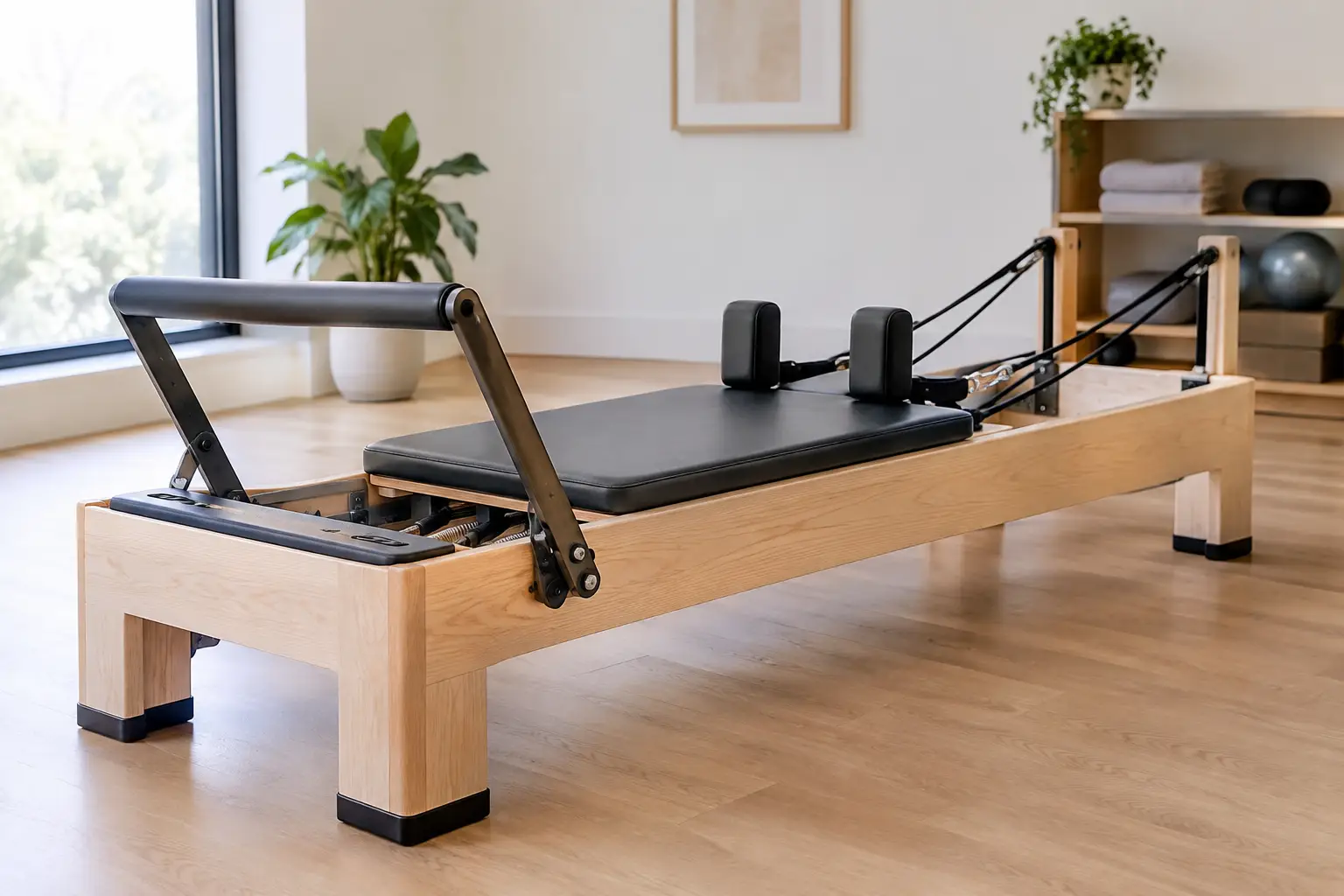
A reformer can have an impressive-looking carriage, a long list of accessories, and a tempting sale price, yet still feel disappointing if the frame flexes, shifts, or develops noise under regular use. The frame is the structural foundation of the machine, affecting how secure it feels during footwork, how smoothly the carriage tracks, how much space it occupies, and whether it remains enjoyable years after purchase. This reformer frame material review looks beyond surface appearance to help you evaluate what wood, aluminum, and steel actually mean for a home Pilates setup.
The best choice is not automatically the heaviest or most expensive one. It depends on your body size, training goals, available space, whether you need to move or store the reformer, and how long you expect to own it.
Why reformer frame material matters
A Pilates reformer frame supports the rails, carriage, springs, shoulder rests, and your changing body weight through every exercise. During slow, controlled work, a low-quality frame may not reveal obvious problems. But more demanding movements, including kneeling work, side splits, standing balance exercises, and faster transitions, can expose instability quickly.
Material also affects the machine’s vibration and sound. A frame that is stiff and well joined generally creates a quieter, more grounded experience. That matters in an apartment, a shared household, or any space where you want Pilates to fit into daily life without feeling disruptive.
Still, material alone does not determine quality. A poorly designed hardwood reformer can be less stable than a well-engineered aluminum model. Look at the complete construction: rail support, welds or joinery, hardware, frame geometry, weight capacity, and the manufacturer’s stated use conditions.
Reformer frame material review: wood, aluminum, and steel
Wood: traditional feel with real structural strengths
Wood-frame reformers are closely associated with studio Pilates, particularly designs inspired by classical equipment. Quality hardwood, often maple or beech, has a substantial, warm appearance and can offer excellent rigidity when it is properly milled and joined. Many people also appreciate the quieter, less industrial feeling of wood in a living room or dedicated wellness space.
A well-made wood reformer tends to stay planted during use because it is heavy. That can be reassuring for taller users, people building confidence with reformer exercises, or households where several people will share the equipment. The weight also helps limit vibration during more dynamic work.
The trade-off is straightforward: wood is rarely the easiest material to move. A full-size wood reformer may be impractical if you need to carry it upstairs, shift furniture before each session, or put it away after use. It also needs a reasonably stable indoor environment. Repeated exposure to high humidity, direct sun, or major temperature swings can affect the finish and, over time, the wood itself.
For most home buyers, wood makes sense when the reformer will have a permanent location and visual appeal matters alongside performance. Choose a sealed hardwood frame rather than a vague “wood construction” claim, which may refer to veneer, softer lumber, or only a few cosmetic components.
Aluminum: practical, light, and common in home models
Aluminum is widely used in contemporary home reformers because it is lighter than wood and resists rust. It can be a sensible choice for someone who wants a full-length reformer but expects to reposition it occasionally. Aluminum frames often create a clean, modern look and may be easier to pair with folding or vertical-storage designs.
A quality aluminum frame can be exceptionally stable. What matters is the thickness and shape of the extrusions, the support beneath the rails, and how the frame is reinforced at high-stress points. Slim, lightweight tubing may save money and make shipping easier, but it can allow more movement under load.
This is where product specifications deserve close attention. Check the listed user weight capacity, not just the overall machine weight. A higher capacity is not a universal measure of quality, but it provides useful context for whether the frame is designed for varied adult bodies and regular use. Also look for clear information about commercial versus residential ratings if you expect multiple daily sessions.
Aluminum is a strong middle-ground option for many households. It is especially appealing if space is limited, the reformer needs to be moved by one person, or you prefer a machine that does not dominate the room. Just do not assume that lightweight means portable. A reformer can still be long, awkward, and heavy enough to require two people to move safely.
Steel: durable support, but quality varies widely
Steel frames can offer excellent strength and a secure, grounded feel. They are common in more budget-conscious reformers, foldable models, and hybrid fitness machines. Steel can be a good value when the manufacturer uses sufficiently thick tubing, solid cross-bracing, and a durable powder-coated finish.
The caution is that “steel frame” is a broad description. Thin steel tubing with minimal reinforcement may flex or wobble more than a thoughtfully engineered aluminum frame. Steel is also heavier than aluminum and vulnerable to corrosion if the coating chips and the reformer is kept in a damp garage, basement, or sunroom.
For indoor use, a well-built steel reformer can serve a beginner or intermediate home practitioner very well. Examine the frame’s connection points, especially where the upright components, legs, and rails meet. If product photos show visible gaps, very narrow supports, or a folding mechanism that appears lightly built, treat a low price as a potential trade-off rather than an automatic bargain.
Construction details that matter as much as material
Frame material is only one part of the buying decision. The best way to assess a reformer is to consider how its components work together under repeated load.
First, look at the rail system. The carriage should travel smoothly without a noticeable side-to-side shift, catching, or rattling. Metal rails should appear straight and securely integrated into the frame. On wood reformers, the rails and their mounting points should feel equally solid rather than added on as a separate afterthought.
Next, consider the base and leg design. Wider contact points can improve stability, but a broad footprint also takes up more floor space. Rubberized feet are helpful for protecting floors and reducing movement, although they cannot compensate for uneven flooring or a structurally weak frame.
Pay attention to hardware, too. Bolts, brackets, screws, and spring anchor points bear significant force. Accessible hardware is useful because periodic checks are part of normal ownership. A reformer that arrives with a small amount of assembly is not necessarily a concern, but unclear instructions or hardware that requires frequent tightening can become frustrating over time.
Finally, distinguish between a frame that folds and one that is genuinely convenient to store. Folding mechanisms add moving parts and may introduce modest frame flex. For occasional storage, that may be an entirely reasonable compromise. For daily use, a non-folding reformer with a stable designated spot may feel better and require less setup effort.
How to match the frame to your home Pilates goals
If you are new to reformer Pilates and want a machine for two or three sessions a week, a well-reviewed aluminum or steel model may be enough. Prioritize a stable base, a realistic user weight capacity, quiet carriage travel, and a return policy that gives you time to assess the experience at home.
If Pilates will become your primary strength and mobility practice, a heavier full-length reformer can be worth the space and expense. Wood and premium aluminum models often provide the durability, carriage length, and accessory compatibility that support progression over time. This is particularly relevant for taller users, those who want more advanced repertoire options, and anyone who prefers the grounded feel of studio-style equipment.
If your first priority is storage, focus less on the headline material and more on the complete dimensions, folded height, transport wheels, and actual machine weight. Measure the route from delivery point to workout space, including doorways, stairwells, and turns. A reformer that technically fits in a room but cannot be moved safely is not a practical home solution.
Questions to ask before you buy
Ask the manufacturer what material is used for the main load-bearing frame, whether the reformer is rated for residential or commercial use, and what the stated user weight capacity includes. Confirm whether the rails, legs, and folding joints are covered by the warranty, not just the upholstery or springs.
It is also worth reading owner feedback for patterns rather than isolated complaints. Repeated mentions of wobbling, loose fasteners, paint chipping, carriage noise, or difficult folding deserve attention. Conversely, comments about a reformer feeling heavy and stable may be meaningful, provided the reviewer has used it long enough to move beyond the first impression.
A frame should support your practice quietly and consistently, not become another household object that needs managing. Choose the material and construction that suit the way you will actually use the reformer, then give yourself enough space to enjoy the work it makes possible.
Leave a Reply
You must be logged in to post a comment.