What Is Reformer Pilates?
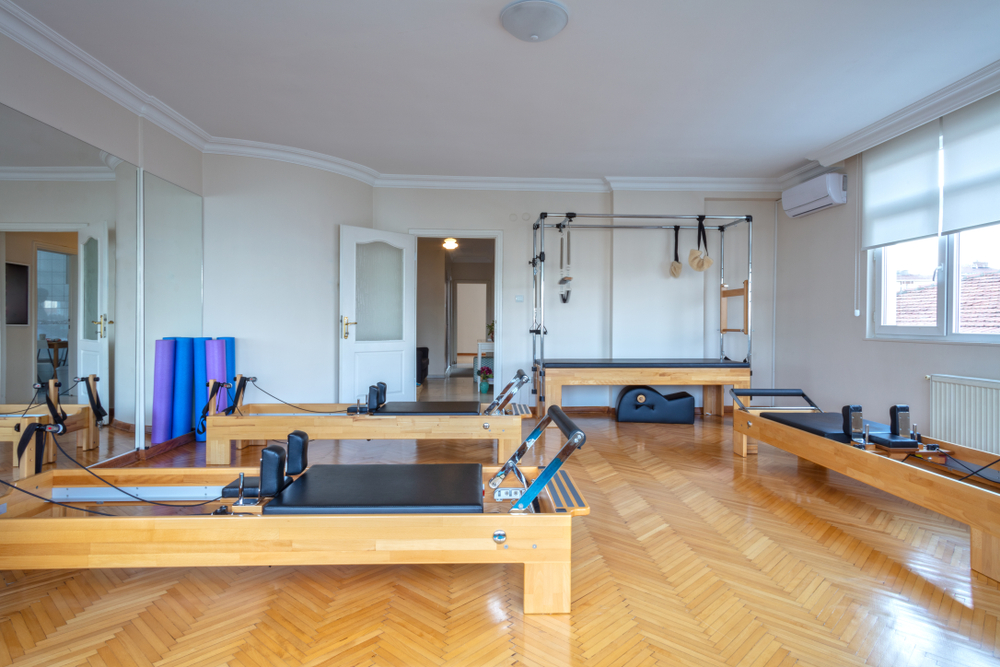
Reformer Pilates is a style of Pilates performed on a specialized machine called a reformer. Unlike mat Pilates, which relies mostly on body weight and a floor mat, reformer Pilates uses a sliding carriage, springs, straps, and pulleys to create resistance and support. This setup allows for a wide range of exercises that can feel more dynamic, more adjustable, and sometimes more challenging than traditional mat-based work.
The reformer itself was originally designed by Joseph Pilates, the founder of the Pilates method. It looks a bit intimidating at first, but it is built to help improve strength, control, flexibility, posture, and body awareness. Because the springs can be adjusted, reformer Pilates can work well for beginners, experienced exercisers, and people who want a more customized workout.
What Is Traditional Pilates?
Traditional Pilates usually refers to mat Pilates, where exercises are done on the floor using body weight, gravity, and sometimes small props like rings, bands, or balls. The focus is still on core strength, alignment, breathing, controlled movement, and precision, but the equipment is minimal. That makes mat Pilates more accessible for home practice and often easier to start with if you are new to the method.
Even though mat Pilates may look simpler, it can be very demanding. Without the support of the reformer, your muscles often have to work harder to stabilize your body through each movement. In that sense, traditional Pilates is not necessarily easier. It is just different in how resistance and support are delivered.
The Main Difference
The biggest difference between reformer Pilates and traditional Pilates is the equipment. Reformer Pilates uses a machine with adjustable spring resistance, while traditional Pilates usually takes place on a mat with little or no large equipment. That one difference changes how the exercises feel, how the body is challenged, and how much support is available during movement.
- Reformer Pilates adds resistance and assistance through springs and straps.
- Traditional Pilates relies more on body weight and floor-based control.
- Reformer workouts can offer more exercise variety and easier resistance adjustments.
- Mat workouts are simpler to do anywhere and usually cost less to start.
How Reformer Pilates Feels Different
Many people notice that reformer Pilates feels smoother and more guided because the machine helps direct movement. The carriage creates motion, while the springs can either increase difficulty or provide support depending on the exercise. This can make certain moves more approachable for beginners, especially when learning proper alignment.
At the same time, reformer Pilates can also feel more intense. The added resistance can challenge the legs, arms, glutes, and core in ways that mat Pilates does not. It also introduces a coordination element, since you are working with moving parts, straps, and changing spring settings.

Benefits of Reformer Pilates
- Adjustable resistance for different fitness levels
- Support for alignment and controlled movement
- Greater exercise variety than mat-only sessions
- Strong focus on core stability and posture
- Useful for strength, flexibility, and body awareness
Benefits of Traditional Pilates
- Easy to practice at home with minimal equipment
- Lower cost to begin
- Excellent for learning core control and breathing
- Improves flexibility, posture, and movement quality
- Accessible for short, consistent workouts
Which One Is Better?
Neither style is automatically better. The right choice depends on your goals, budget, access to equipment, and personal preference. If you want a more equipment-based workout with adjustable resistance and studio-style variety, reformer Pilates may be a great fit. If you want something simple, affordable, and easy to do anywhere, traditional mat Pilates may make more sense.
For many people, the best approach is not choosing one over the other. Reformer Pilates and traditional Pilates can complement each other really well. Mat work builds deep control and awareness, while reformer work adds resistance, feedback, and variety.
Final Thoughts
Reformer Pilates differs from traditional Pilates mainly because of the machine, but both methods are built around the same core principles: control, precision, breathing, alignment, and mindful movement. Whether you start on a mat or on a reformer, both can help you build strength, improve posture, and move with more confidence.
If you are exploring your options, try both styles if you can. The experience is different, but the benefits can work together beautifully.
Leave a Reply
You must be logged in to post a comment.