What matters when buying a Pilates reformer for home or a small studio
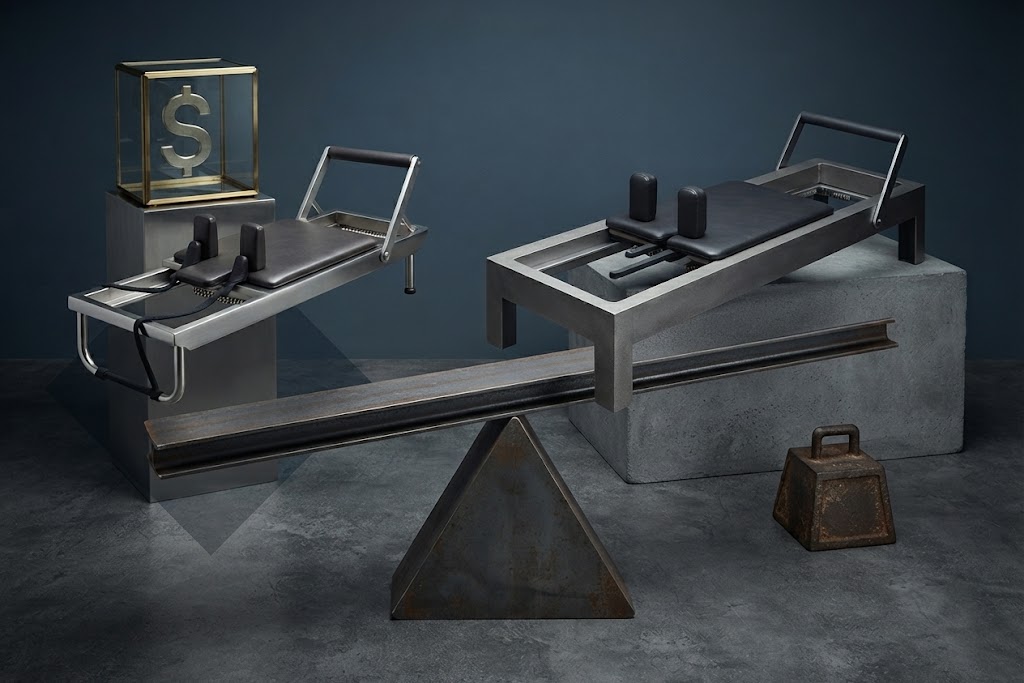
The first tradeoff is simple: lower price and a smaller footprint usually mean less mass, while heavier-duty frames cost more but stay steadier under daily use. That matters because a machine that feels fine for three sessions a week at home may not hold up in a small studio schedule.
Home buyers and studio buyers should not use the same checklist. If you need a reformer for a spare room or apartment, measure the space, check storage, and look hard at foldable models. If you run classes, focus on frame stability, carriage feel, and how the machine handles repeated use.
This article answers the questions buyers actually ask: foldable vs. fixed, studio-grade vs. entry-level, and what drives value at lower price points. It also helps compare a single reformer against an affordable Pilates equipment set for small spaces when you want more than one tool.
PersonalHour lists professional reformers starting at $870, with limited inventory, fast shipping on in-stock reformers, and HSA/FSA approved status. That makes price, availability, and payment options part of the decision, not an afterthought.
If you’re reading best beginner-friendly Pilates reformer small spaces or best commercial Pilates reformer reviews small studio, this guide keeps the focus on real buying decisions, not a generic feature list.
Are foldable Pilates reformers worth it for home use?
Yes — if storage is your biggest problem. Foldable Pilates reformers are built to take up less space when you are not using them. In plain terms, they collapse or fold so you can tuck them into a closet, under a bed, or against a wall instead of leaving a full-length frame out in the room.
That makes them a strong fit for apartments, shared rooms, and multipurpose spaces. A smaller visual footprint matters too. If your living room doubles as a workout area, a foldable machine is easier to live with day to day than a fixed-frame reformer that stays out all the time.
The tradeoff is stability. Some foldable models can feel a little less planted than a heavier fixed-frame machine, especially during faster transitions or heavier resistance work. That does not make them a bad choice. It just means the design is solving for storage first, not maximum rigidity.
PersonalHour’s Janet Elite Plus Premium Foldable Pilates Reformer is a good example of the category: it is aimed at buyers who want a compact home Pilates reformer for small spaces without giving up a full reformer setup.
Rule of thumb: choose a foldable reformer if easy stowing matters most. Choose a fixed-frame reformer if you plan to use it daily and want the most stable feel under load. For a portable Pilates reformer that can travel or move between rooms, foldable usually wins on convenience.
What makes a reformer studio-grade, and when is it worth paying more?
“Studio-grade” usually means the frame, springs, carriage, and hardware are built for frequent adjustments and repeated classes, not just occasional home workouts. In plain terms: it should feel stable when different bodies use it all day, and the carriage should keep moving smoothly after hundreds of sessions, not just a few.
That difference matters. A reformer that works well for 3 sessions a week at home may not be the right machine for back-to-back clients in a small studio. If you are comparing the best commercial Pilates reformer reviews for small studios, focus on use pattern first. Daily teaching puts more stress on the frame, footbar, springs, and wheels than a beginner setup in a spare room.
A good example is PersonalHour’s Nano Pro Lite – Studio Pilates Reformer. It is positioned for studio use, so it makes sense to judge it on stability, carriage feel, and how well it handles repeated class turnover, not just on the accessory count.
The value question is simple: if the machine will see daily use, paying more up front can cost less over time than replacing a lighter model after a year or two. That is especially true for small studios where downtime means lost classes.
Before you compare straps, boxes, and add-ons, check three things first: stability, smooth carriage movement, and inventory/shipping timing. If you need a best beginner friendly Pilates reformer for small spaces, those same basics still matter — but the right answer may be a lighter, foldable model instead of a full studio build.
How to judge value in lower-priced Pilates equipment
Start with total cost of ownership, not the sticker price. That means the purchase price, shipping, storage, and how long the machine will hold up. A reformer that costs less up front can cost more later if the frame flexes, the carriage rolls rough, or you need replacement parts sooner than expected.
For budget comparison, look at what you actually get for the money. PersonalHour’s Pilates reformers collection lists professional reformers starting at $870 and includes free unlimited access to the PersonalHour App. That gives buyers a clear baseline for what a lower-priced professional machine looks like.
The broader market shows the same pattern: affordable models often compete on size and simplicity, not just price. Roundups of beginner-friendly reformers for small spaces usually focus on compact frames and home use, while chair collections from Peak Pilates and Pilates.com show why Pilates chairs matter for buyers who need a smaller footprint than a full reformer. A chair can be the better value if you want strength work, less storage hassle, and a lower entry price.
For best value Pilates chairs for home, ask three questions: does it feel stable, does it fit your space, and will it still work after a year of regular use? For affordable Pilates equipment set small space, prioritize pieces you will use weekly, not add-ons that sit in a box. For best beginner friendly Pilates reformer small spaces, choose the machine that balances footprint, carriage feel, and durability — not the one with the longest feature list.
Fast shipping, HSA/FSA eligibility, and online buying options
For many buyers, the final decision comes down to timing. If you need pilates reformers for a class launch, a home setup, or a replacement unit, “ships in 4–6 weeks” is not useful. Fast shipping matters because it lets you start using the machine now, not after a long backorder window. PersonalHour says its in-stock reformers ship fast, and its collection page also notes HSA/FSA approved status. HSA/FSA means tax-advantaged health spending accounts that may cover eligible fitness equipment when your plan allows it.
When you shop online, look for stores that show three things clearly: stock status, delivery timing, and a full product page with dimensions, weight, and included parts. That matters even more for an affordable pilates equipment set small space buyers can actually fit through a door and store at home. A vague bundle can look cheap until shipping and missing parts push the total up.
The same rule applies to accessories. If you are comparing rings, props, or add-ons, prioritize compatibility and delivery speed over large bundles that inflate the price. Reputable sellers should tell you whether an item fits your reformer, when it ships, and whether it is sold as a standalone piece or part of a package. For buyers searching for the best online stores for Pilates accessories with next-day delivery in the USA, that clarity usually matters more than a long list of extras.
Virtual Pilates classes, apps, and back-pain programs: what actually helps
Virtual Pilates classes can work well if the program is structured and you follow the cues every time. That matters more than whether the class is live or recorded. In-person sessions still have one clear advantage: the teacher can correct your foot placement, rib position, and spring choice on the spot. Virtual classes trade that immediate correction for convenience, lower cost, and easier consistency. For many buyers, that means more total practice time on their pilates reformers, which is often the real win.
The best online platforms do more than stream workouts. They give beginners a place to stay engaged between sessions: class libraries, beginner tracks, form checklists, and community groups where people ask about setup, spring tension, and pacing. That kind of structure helps when you are learning at home and do not want to guess your way through every session. The Merrithew online training ecosystem and the broader class libraries sold by brands like Pilates.com show how much of the market now centers on guided home practice.
AI coaching apps can help too, but only as support tools. They are useful for setting goals, logging sessions, and tracking whether you are actually using the machine three times a week or once a month. They are not a substitute for a trained instructor, especially if you are new to reformer work or dealing with pain.
For back pain, choose programs that say they are designed for pain management or rehabilitation, not just general fitness. If pain is new, sharp, or getting worse, get medical guidance before you start. The safest path is a class plan built for back-sensitive users, then a slower progression with clear cues and conservative spring settings.
Bottom line for home buyers and small studios
The choice comes down to how often you’ll use the machine and where it will live. For storage-first homes and compact apartments, foldable pilates reformers make sense because you can move them out of the way after class. For steady daily use, a fixed reformer usually feels more planted underfoot and holds up better over time. For heavier schedules in a small studio, studio-grade models are the safer bet because stability and repeat availability matter more than saving a few hundred dollars up front.
Price is only part of the math. Compare the sticker price with durability, shipping speed, and any HSA/FSA eligibility or financing options you can use. A cheaper machine that ships slowly, wears out early, or is hard to replace can cost more in the long run. For small-studio buyers, inventory matters too: if you need multiple units, buy the model you can actually get again.
If the machine will be used often and stored rarely, pay for sturdier construction. If space is tight and the reformer will be folded after use, a compact model is the better fit.
Revisit the examples covered earlier and match them to your use case before you buy.
Leave a Reply
You must be logged in to post a comment.