What to compare before buying a home Pilates reformer
Most home buyers are not choosing between dozens of meaningfully different reformers. They are usually choosing between foldable and non-foldable machines, then deciding how much space, stability, and setup help they want. That is the real tradeoff in home Pilates equipment.
Start with four specs: footprint, weight capacity, warranty, and delivery/setup. Footprint tells you whether the machine fits in a spare room or has to live in a corner. Weight capacity matters for long-term durability and for how solid the carriage feels under load. Warranty gives you a clue about how the brand stands behind the frame and moving parts. Delivery and setup matter because some reformers arrive fully assembled, while others need more work before the first class.
Studio-style machines often cost more, but they can feel steadier for daily use. For example, Core Collab’s Eco Folding reformer is listed at $2,399, while PersonalHour’s Janet Plus starts at $1,810 in current roundup coverage. Those prices show the gap buyers face: a lower entry price does not always mean the best fit for daily use or heavier training.
In the next sections, we’ll sort the best options for small spaces, value buyers, and the cases where a foldable reformer is worth it.
Best home Pilates reformers for effective full-body workouts
The best home Pilates reformers do more than save space. They stay steady under load, give you enough spring resistance to challenge your legs and core, and include the right accessories for common moves like footwork, long stretch, and rowing.
In 2026 roundup coverage, three names keep showing up: the Balanced Body Allegro 2, the AeroPilates Reformer 287, and the Merrithew SPX Reformer Bundle. That mix tells you a lot. The Allegro 2 sits closer to studio-style use. The AeroPilates 287 is a compact home pick. The Merrithew bundle lands in the middle because it adds accessories that expand what you can do without buying pieces one by one. See the use-case split in Women’s Health’s reformer guide and Good Housekeeping’s reformer roundup.
For small spaces, look first at footprint and storage. Compact reformers are easier to move, but they can feel lighter and less planted during faster transitions. Heavier studio-style machines usually track better and hold up better if you plan to use the reformer most days or share it across multiple users. That matters more than the logo on the frame.
When you read best home Pilates reformers reviews, focus on three things: how the carriage feels under load, whether it glides smoothly from end to end, and whether the footbar and straps support the exercises you actually do. A reformer can look strong on paper and still feel shaky in a teaser or jumpboard set.
If you want home Pilates equipment that supports full-body work, choose the model that matches your room, your training frequency, and the moves you’ll repeat every week.
Are foldable Pilates reformers worth it for home use?
Yes—if floor space is tight and you will store the machine often. That is the core rule for home Pilates equipment. A foldable reformer earns its keep when you need to move it out of the way between sessions, not when you can leave it set up full-time.
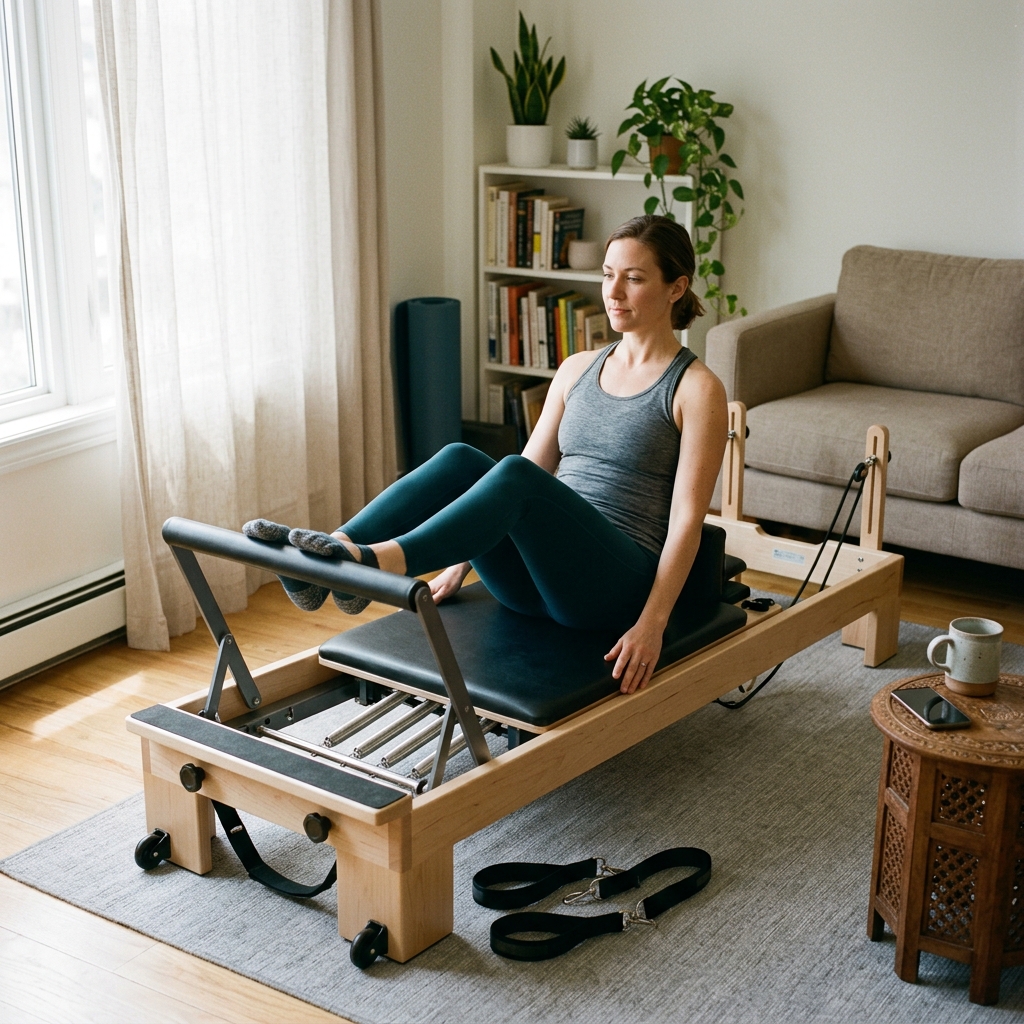
The tradeoff is simple: folding designs save space, but they can give up some rigidity. Before you buy, check three things: the frame, the locking points, and the carriage feel. The frame should not flex when you load it. The locks should hold the machine firmly in both positions. And the carriage should glide without wobble or extra noise. If those details are weak, a foldable model may feel less planted than a fixed-frame reformer.
Core Collab’s Eco Folding reformer is a good example of how brands position foldable machines for home users who want a studio feel plus storage flexibility. That is the right use case: a reformer that can live in a small apartment, spare room, or shared workout area without taking over the floor.
Shipping and handling matter too. PersonalHour’s foldable reformer collection puts in-home delivery front and center, which tells you something important: these machines are not just about the workout. They are also about how they arrive, move through your home, and get stored.
Use this test: if the reformer will stay out all the time, a non-foldable model is usually the better long-term buy. If you need to move it daily, foldability is worth paying for.
What to check on specs, shipping, and warranty before you buy
Before you order home pilates equipment, check the numbers that affect daily use, not just the product photos. Start with footprint dimensions, folded dimensions, and ceiling clearance. A reformer that fits on paper can still block a doorway, hit a low shelf, or feel cramped once you add a box or jumpboard. Measure the room, then measure the path from storage to workout spot.
Weight capacity matters too. It affects stability, especially for heavier users and households where more than one person will use the machine. A higher capacity usually signals a sturdier frame and better long-term durability. If a listing does not state the limit clearly, treat that as a warning sign.
Warranty terms deserve the same attention as the frame specs. Compare warranty length, what parts are covered, and whether the seller stocks replacement parts. Accessories also change value. A bundle with straps, box, footbar, and jumpboard can save money if you would buy those items later anyway.
Shipping can change the real price. In-home delivery, fast shipping, and confirmed in-stock status reduce the hassle of moving a large machine into a small space. For buyers comparing options, that convenience can matter as much as the sticker price.
Financing and HSA/FSA eligibility come up often, but only count them if the seller states the terms clearly in writing. If the details are vague, ask before you buy.
Which home Pilates equipment fits your space and budget
Most roundup pages list “best” reformers. That helps less than you’d think when you’re choosing home Pilates equipment for a real room, a real budget, and a real routine. The better question is fit by use case.
If you live in a small apartment or share a multipurpose room, start with a foldable or compact reformer. You want a machine that stores easily, moves without a struggle, and still gives you enough carriage length for full-body work. For many buyers, that means trading a few extra inches of platform for easier daily use.
If you plan to train three to five times a week, look at sturdier models with higher weight capacity and a more stable frame. That matters more than a low sticker price. A reformer that feels solid under footwork and long-box work usually holds up better over time.
If you’re shopping on value, compare three things before you buy: build quality, warranty length, and shipping terms. A cheaper reformer can cost more once you add freight charges, missing accessories, or a short warranty.
Studio and semi-pro buyers should put carriage stability, accessory durability, and service support ahead of compact storage. That’s the difference between a machine that works for occasional home sessions and one that can handle repeated client use.
For a broader market view, Good Housekeeping’s reformer roundup and NBC Select’s buyer guide both show how much the category varies by size, price, and build.
How to read reformer reviews without getting misled
Star ratings help, but they do not tell you much about daily use. For best home pilates reformers reviews, look for comments that name a real workout: “I use it three times a week for 20-minute sessions,” or “It folds after class and fits behind a sofa.” That is more useful than a generic five-star “love it.”
Focus on four details. First, carriage smoothness: does the carriage glide without sticking? Second, spring feel: do the springs feel too light, too heavy, or uneven across settings? Third, noise: squeaks and clunks matter in apartments and shared homes. Fourth, setup time: some reformers arrive ready to use, while others need assembly that takes an hour or more.
Treat vague praise like “great quality” as a starting point, not proof. Better reviews mention weight capacity, footprint, and delivery experience. Those are the details that affect whether a machine works in your room and on your schedule. Roundups from outlets like Good Housekeeping and NBC Select can narrow the field, but always verify the seller page before you buy. Check the listed dimensions, warranty, included accessories, and shipping terms.
That is the practical way to shop for home Pilates equipment: pick the reformer that fits your room, your budget, and your workout plan.
Leave a Reply
You must be logged in to post a comment.