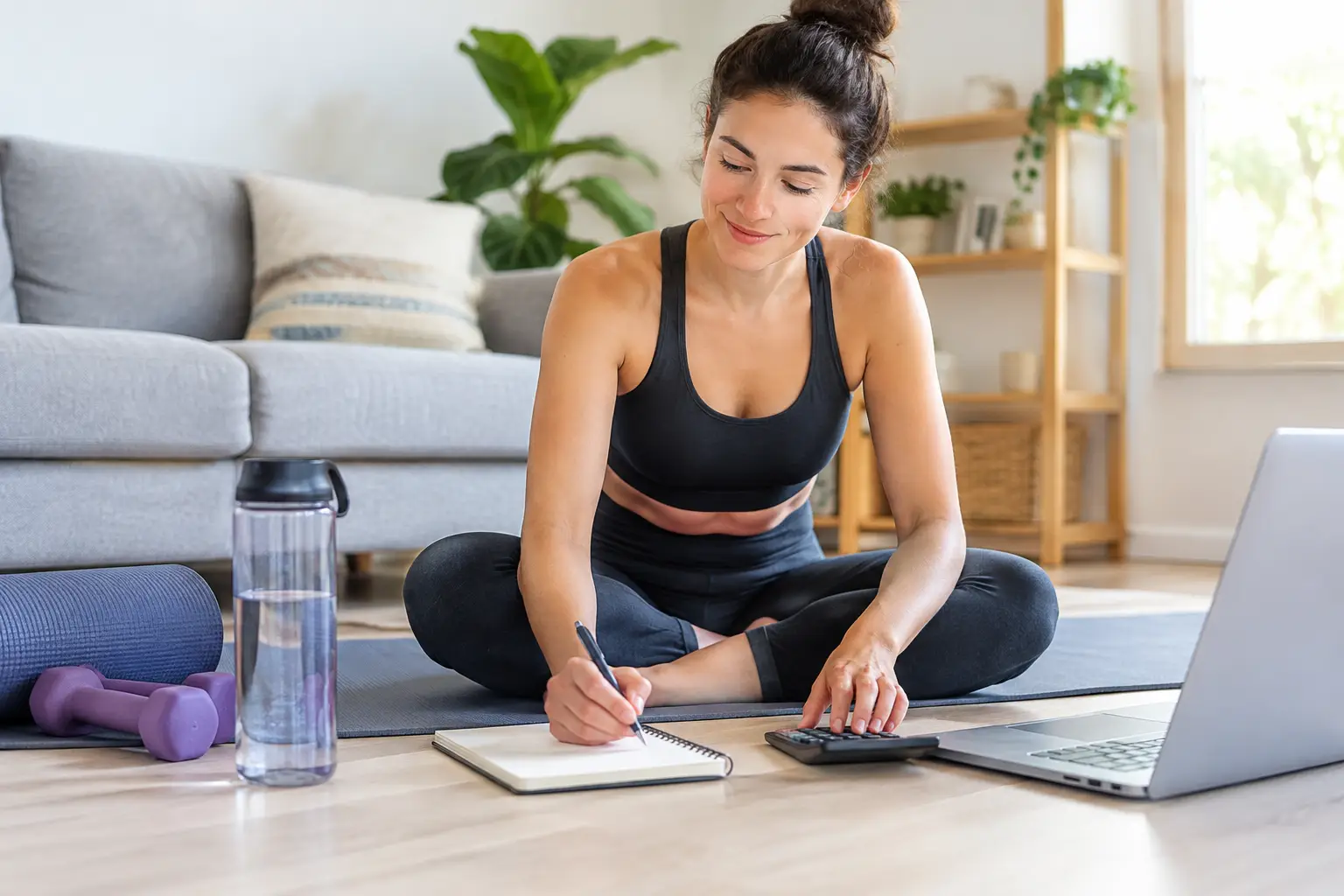
A reformer can look like the missing piece in a home routine, but it is rarely the first cost worth solving. Effective home Pilates budget planning starts with a more useful question: what setup will make it easier for you to practice three months from now? The answer may be a mat and a small corner of the living room, a studio membership while you learn, or a reformer that fits both your body and your home.
Pilates spending becomes frustrating when every purchase is treated as a separate decision. A better approach is to build a complete picture that includes instruction, equipment, space, delivery, and the practical cost of keeping a routine going. This gives you room to spend confidently without assuming that the most expensive option is automatically the best value.
Start Home Pilates Budget Planning With Your Practice
Before assigning a dollar amount, define what you want your home practice to do. Someone using Pilates for gentle mobility and core control may need very little equipment. Someone who enjoys reformer classes and wants consistent resistance training at home has a different set of needs. Neither goal is more serious. They simply call for different budgets.
Think about frequency, experience, and the type of feedback you need. If you are brand new to Pilates, paying for a few beginner classes or a structured online program can be more valuable than buying several accessories at once. Good instruction helps you understand breathing, alignment, spring resistance, and exercise progressions. It can also prevent a common expensive mistake: buying a reformer designed for a workout style you do not actually enjoy.
Be honest about your available time. A home setup earns its value through use, not through its appearance. If you realistically have 20 minutes before work, prioritize equipment that is quick to access and comfortable to use in short sessions. If you plan longer workouts several times a week, a dedicated area and more substantial equipment may make sense.
Build Your Budget in Layers
A layered plan keeps the first purchase manageable and makes later upgrades intentional. Rather than setting one large number for “home Pilates,” separate the budget into categories: instruction, foundational equipment, optional resistance tools, larger equipment, and ongoing costs.
For many beginners, the foundation is straightforward. A supportive mat, comfortable movement clothes, and reliable instruction can create a useful practice for far less than the price of a reformer. Pilates mats are typically thicker than standard yoga mats because more cushioning can make supine work, kneeling positions, and side-lying exercises more comfortable. That said, extremely thick mats can make balance work feel less stable, so comfort should be matched to the exercises you expect to do.
Small props can expand a mat practice without overwhelming a room or a budget. A Pilates ring, light hand weights, resistance bands, a small ball, and sliders can add variety and challenge. Buy these gradually. You do not need every prop used in a streaming class, and low-cost accessories can still become clutter if they do not support your actual routine.
A realistic range for common setups
Price varies by materials, brand, and sales, but these ranges can help frame decisions in the US market:
- A basic mat setup with one or two props may cost about $50 to $150.
- A more complete mat setup with several quality props and a paid instruction option may land around $150 to $400 initially.
- A compact Pilates reformer commonly begins around $500 to $1,500, with trade-offs in carriage length, frame stability, resistance quality, and durability.
- A mid-range to premium home reformer often falls between $1,500 and $4,000 or more before delivery and accessories.
These are planning ranges, not a rule that every household should move through each level. Some people remain happily mat-based for years. Others find that a well-built reformer is the equipment they use most consistently. The right category depends on how it serves your movement goals.
Account for the Costs That Do Not Fit in the Product Price
The listed price of a reformer is only one part of ownership. Delivery can be significant because reformers are large, heavy, and sometimes shipped by freight. Assembly may be included, offered for an extra fee, or left to the buyer. Measure doorways, stairways, elevators, and the intended workout area before ordering. A machine that cannot reach its destination easily is not a small logistical detail.
Also consider the room around the machine, not just its footprint. You need enough clearance to get on and off safely, extend your legs, move around the frame, and store accessories without creating a daily obstacle. Folding or vertical-storage reformers can work well in apartments and multipurpose rooms, but storage mechanisms involve trade-offs. Confirm the folded dimensions, weight, and whether you will be comfortable moving the machine regularly.
Accessories deserve their own line in the budget. A box, jumpboard, platform extender, sitting box, or upgraded straps may be useful for your preferred programming, but they are not universally necessary on day one. Check what is included with the model you are considering. Two reformers with similar base prices can differ substantially once required or preferred accessories are added.
Finally, plan for maintenance and replacement. Springs, wheels, ropes, straps, upholstery, and moving parts all experience wear. The timetable depends on usage and manufacturer guidance, but a reformer is not a one-time cost with no follow-up. A manufacturer warranty can offer meaningful protection, yet it does not remove the need for routine cleaning, inspections, or eventual replacement parts.
Compare Reformer Ownership With Other Ways to Practice
A reformer is often compared with a gym membership, but the more useful comparison is with your likely mix of alternatives. That may include studio classes, private instruction, an online membership, gym visits, and a mat practice at home. Calculate what you currently spend or would realistically spend over one to three years.
For example, a $2,000 reformer used four times a week for two years works out to less than five dollars per session before accessories and maintenance. Used twice a month, the same purchase tells a very different value story. This does not mean you need to prove a reformer will “pay for itself.” Convenience, privacy, and the ability to practice at your preferred time have real value. But it does mean usage should be central to the decision.
If you are unsure whether reformer work fits your body or preferences, spend a modest amount on studio classes first. Notice what you like about the experience. Is it the moving carriage, the spring resistance, the instructor’s cues, or simply having a scheduled appointment? A home reformer can recreate some benefits, but it will not automatically provide hands-on corrections, a social setting, or the motivation of a booked class.
Set a Spending Ceiling Before You Shop
Equipment shopping is easier when you decide your ceiling before comparing features. Without one, it is easy to begin with a compact model and gradually justify a much more expensive purchase because each added feature sounds useful in isolation.
Set two numbers: your comfortable budget and your absolute maximum. Your comfortable budget is what you can spend without disrupting savings, debt payments, housing costs, or essential expenses. Your maximum is the highest amount you would consider only if the additional value is specific and clear, such as a stronger frame, a longer carriage for your height, better warranty coverage, or a storage design that makes home use realistic.
Then reserve a small contingency amount for taxes, shipping, assembly, and essentials that may not be included. This protects the budget from the most common surprise: falling in love with a listed price that is not the final price.
Use a Phased Plan Instead of Buying Everything at Once
A phased approach is especially helpful for beginners and for anyone furnishing a small space. Start with a quality mat, basic instruction, and only the props you expect to use. Practice long enough to learn what feels limiting. You may discover that stronger resistance bands meet your needs, or you may become certain that a reformer would support more consistent training.
If a reformer remains the goal, create a separate savings target rather than placing pressure on a single sale event. Track the full delivered cost and the models that fit your space. This creates time to compare carriage dimensions, weight capacity, resistance systems, warranty terms, and storage requirements with a clearer head.
Better information leads to better Pilates choices, especially when a purchase will share space with your daily life. Build the setup that invites you to move often, supports the way your body feels, and leaves your budget steady enough to enjoy the practice.
Leave a Reply
You must be logged in to post a comment.