
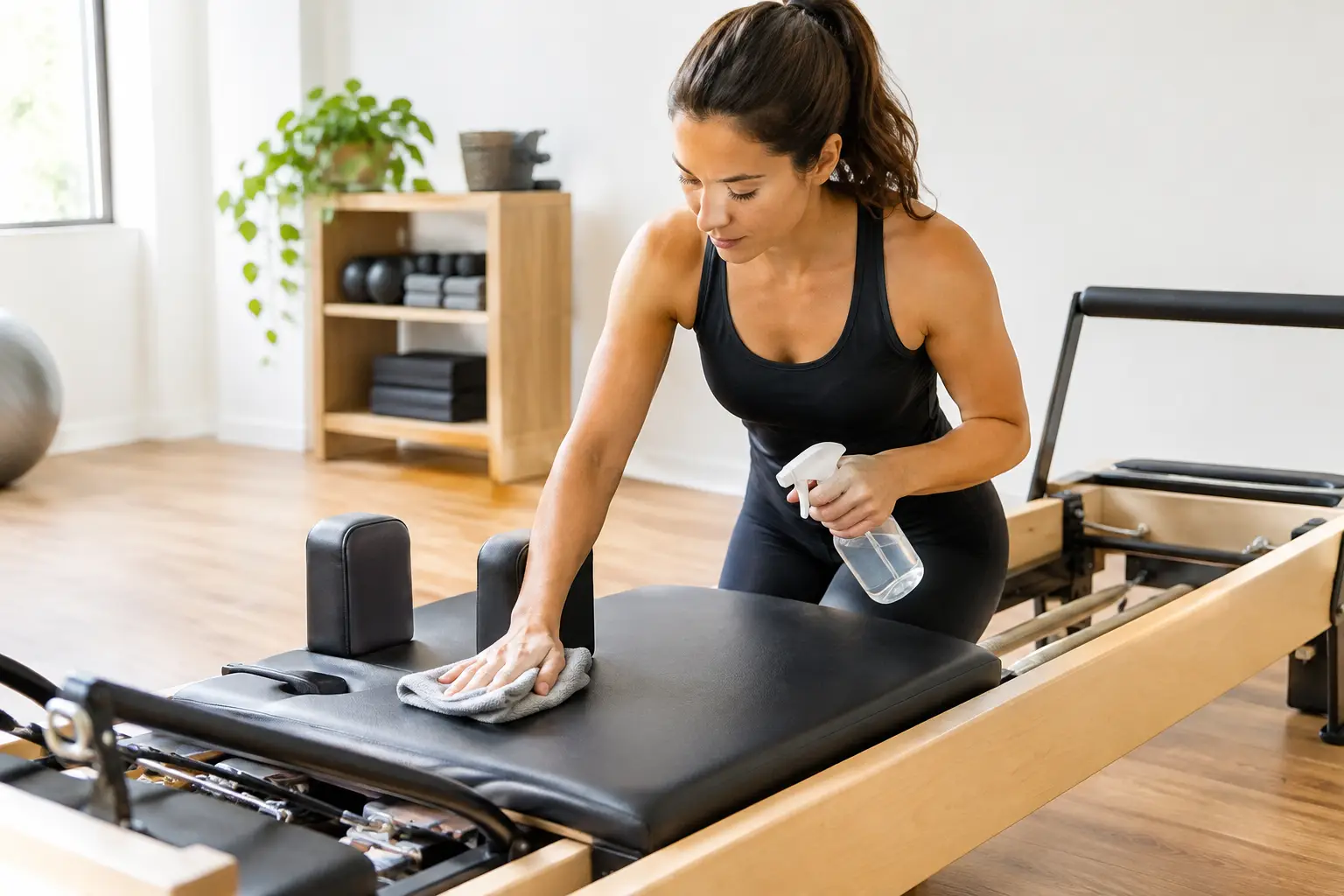
A reformer can look clean and still need attention. Sweat, body lotion, pet hair, dust, and residue from household cleaners all collect in places that affect both comfort and performance. A consistent reformer cleaning routine protects the surfaces you touch most while helping you notice small equipment issues before they become expensive repairs.
For a home reformer owner, the goal is not to sanitize every inch of the machine after every class. It is to use the right product, in the right amount, on the right material. Overcleaning with harsh sprays can dry out upholstery, leave rails sticky, and create more maintenance work than it prevents.
Start With Your Reformer Manufacturer’s Guidance
Before choosing a cleaner, check the care instructions supplied with your reformer. This matters more than a general cleaning recommendation because reformer materials vary widely. A commercial studio model may have different vinyl, metal finishes, wheel systems, and wood components than a compact folding reformer designed for a spare bedroom.
Many manufacturers recommend a mild soap-and-water solution or a reformer-safe disinfectant for upholstery. Some specifically discourage alcohol-heavy products, bleach, hydrogen peroxide, essential oils, abrasive powders, or sprays that leave a slippery film. Those restrictions are not simply cautious fine print. Strong chemicals can cause vinyl to crack or discolor over time, strip protective coatings, and weaken adhesives around pads.
If your manual is unavailable, begin conservatively. Use a soft microfiber cloth that is lightly dampened rather than saturated, then dry the surface with a second clean cloth. Test any new product on a small, less visible area first. A cleaner that seems harmless on a kitchen counter may not be appropriate for fitness upholstery or powder-coated metal.
Reformer Cleaning After Each Workout
The most useful habit is a brief wipe-down once you finish using the machine. It takes only a few minutes and prevents sweat and skin oils from sitting on the places that receive the most contact.
Focus on the carriage upholstery, headrest, shoulder rests, footbar padding, platform extender if you use one, and any handles or loops that touched your hands or feet. Wipe grips according to the manufacturer’s directions, especially if they are foam, cork, leather, or fabric-covered rather than sealed rubber. Let everything air-dry fully before folding the machine, putting straps away, or covering it.
Use less liquid than you think you need. Spray cleaner onto the cloth instead of directly onto the reformer whenever possible. Direct spraying can send moisture into seams, adjustment holes, carriage wheels, and spring connections. It can also leave a mist on the floor, which is an avoidable slipping risk during your next workout.
If multiple people use the same reformer, each person should wipe down contact surfaces after class. This is less about making a home gym feel clinical and more about preserving a pleasant, shared practice space. It also keeps the next user from inheriting a sweaty footbar or damp carriage.
A Weekly Routine for Rails, Straps, and the Frame
Once a week, set aside 10 to 15 minutes for a more complete visual check and cleaning. Dust is easy to overlook in a home setting, particularly if the reformer sits near a window, under a ceiling fan, or in a multipurpose room. Yet dust and hair can collect near moving components and affect how smoothly the carriage travels.
Start by vacuuming or gently wiping around the floor beneath the frame. Then use a dry microfiber cloth to remove dust from the rails, frame, and spring area. Do not apply lubricant, furniture polish, or cleaning spray to rails unless your manufacturer explicitly tells you to. Many reformers are designed to run dry, and adding the wrong product can attract grit or make the carriage feel uneven.
Inspect the straps as you clean them. Look for fraying, thinning, discoloration, rough edges, stretched sections, or stitching that is coming loose. Wipe sealed straps gently with a manufacturer-approved cleaner and dry them completely. Fabric loops and soft goods may require a different approach, such as a damp cloth or occasional hand washing, depending on their construction.
Take a close look at the springs, clips, and attachment points. Springs should be dry and free from visible rust, while clips should close securely. Do not soak springs or spray cleaner into their hooks. If a spring is stretched, corroded, or making a new noise, stop using it and follow the brand’s replacement guidance. Springs are safety components, not a part to keep using until failure.
What Not to Use on a Pilates Reformer
A reformer is not a hard plastic gym bench, so the strongest available disinfectant is rarely the best answer. Avoid bleach unless the manufacturer explicitly approves it. It can damage finishes and upholstery, and its fumes are unpleasant in the small rooms where many home reformers live.
Also skip abrasive scrubbers, rough paper towels, and magic-eraser-style pads. They may remove a mark quickly, but they can dull coated metal and wear away the protective top layer of vinyl. Oily household sprays are another common mistake. They can leave the carriage, footbar, and flooring slick, which compromises stable setup and safe movement.
Be careful with homemade solutions as well. Vinegar is often presented as a universal natural cleaner, but it is acidic and not automatically suitable for every surface. Essential-oil blends can leave residue, trigger sensitivities, and interact poorly with synthetic materials. Mild does not always mean compatible.
Handle Stains and Odors Without Overreacting
For a fresh mark on upholstery, respond promptly with a lightly damp cloth and mild soap if approved by the manufacturer. Blot rather than scrub. Aggressive scrubbing can push a stain deeper into seams or create a faded patch that is more noticeable than the original mark.
Persistent odors usually point to trapped moisture, not a need for stronger fragrance. Make sure pads, loops, and straps dry fully after cleaning. Improve airflow around the machine, especially if it is kept in a basement, garage, or enclosed workout room. If odor, mildew, or peeling upholstery continues, contact the manufacturer or a qualified equipment service provider before trying increasingly harsh products.
Pet hair can be handled with a vacuum attachment or lint roller on dry surfaces, but keep adhesive rollers away from delicate fabrics and unfinished wood. If your reformer is near an open window or used by a shedding pet household, a simple cover can reduce dust between sessions. Choose one that is breathable and only place it on the machine after every surface is dry.
Make Cleaning Part of Long-Term Ownership
Cleaning is also an opportunity to assess whether your reformer still fits your home and practice. A carriage that suddenly sticks may need its rails cleaned, but it could also indicate wheel wear or an alignment issue. A recurring squeak might be harmless, or it may be a sign that a part needs inspection. The difference depends on the model, age, frequency of use, and manufacturer guidance.
Keep a small care kit near the reformer: microfiber cloths, an approved cleaner, a dry towel, and a copy of the care instructions. This makes the routine easy enough to maintain after a 20-minute home session, when motivation for chores is understandably low. It also reduces the temptation to use whatever cleaning product happens to be under the kitchen sink.
A well-kept reformer does more than look better in your home. It creates a calmer, more reliable place to practice, where the carriage feels ready, the surfaces feel comfortable, and your attention can stay on movement rather than maintenance.
Leave a Reply
You must be logged in to post a comment.